The global demand for high-precision industrial filtration and architectural screening has forced a shift in how engineers evaluate perforated metal suppliers. No longer is the selection based solely on raw material cost; the focus has moved toward the structural integrity of the perforation patterns and the long-term corrosion resistance of the finishing treatments.
As infrastructure projects grow in complexity, the interplay between open-area percentages and load-bearing capacity becomes a critical engineering bottleneck. Failure to align the perforation geometry with the actual stress loads can lead to premature material fatigue, making the technical expertise of the manufacturer more valuable than the product itself.
This analysis explores the technical criteria for selecting high-performance metal screens and how these components integrate into modern security and industrial frameworks, including the specialized solutions offered by perforated metal suppliers.


The structural integrity of a perforated panel is determined by the remaining "bridge" or "web" between holes. When a sheet is perforated, the removal of material creates stress concentration points, particularly around the edges of the holes, which can lead to deformation under load.
Professional manufacturers utilize staggered patterns to distribute these stress points more evenly across the surface, ensuring that the panel maintains its rigidity while maximizing airflow or light transmission.
The most critical parameter is the Open Area Percentage, calculated by the ratio of the area of the holes to the total area of the sheet. This directly impacts the transparency, filtration efficiency, and weight of the final component. For high-flow industrial applications, a higher open area is required, but this must be balanced against the required mechanical strength.
Another key metric is the Hole Diameter and Pitch. The pitch—the distance from the center of one hole to the next—determines the granularity of the screen. In security contexts, smaller pitches are often preferred to prevent climbing or the passage of small objects, aligning with the rigorous standards used in 358 security fencing.
Finally, the thickness of the base metal (gauge) must be specified. A thinner gauge allows for easier bending and lower weight, but it increases the risk of warping during the punching process, necessitating high-precision tooling from the supplier.
Material selection is a balance between environmental exposure and budget. Carbon steel is the industry baseline for structural strength and cost, but it requires extensive coating—such as PVC or galvanization—to prevent oxidation in humid or saline environments.
Engineering teams must analyze the specific chemical exposure of the site. For example, in coastal regions, aluminum or high-grade stainless steel is mandatory to avoid the rapid degradation seen in standard painted carbon steel.
The relationship between the open area and the structural load capacity is non-linear. As the percentage of open area increases, the overall stiffness of the panel drops significantly, which can lead to "oil-canning" or buckling under wind loads or physical impact.
To mitigate this, engineers often introduce reinforcing bends or frames, similar to the V-shaped beams found in 3D security fences, to restore the lost rigidity.
In modern urban planning, perforated panels are increasingly integrated into acoustic barriers. By combining a perforated outer layer with an absorbent inner core, these systems can break up sound waves and reduce noise pollution from highways or railways. The perforation acts as a Helmholtz resonator, absorbing specific frequency bands based on the hole size.
For security applications, perforated sheets are often layered with welded wire mesh. This hybrid approach provides the aesthetics of a clean architectural finish while maintaining the anti-climb and anti-cut properties required for high-security perimeters like airports or government buildings.
The manufacturing landscape is shifting from traditional mechanical punching to CNC laser cutting and chemical etching. Mechanical punching is faster and more cost-effective for standard round holes, but it can induce internal stresses in the metal sheet that cause warping.
Laser cutting allows for complex, non-repetitive patterns and precise edges without the need for physical dies. This enables the creation of customized architectural screens and precise filter elements that were previously impossible to manufacture.
Emerging trends indicate a move toward hybrid production: using punching for the bulk of the holes to maintain speed and laser trimming for the edges to ensure perfect fitment in modular assembly systems.
When auditing potential partners, procurement managers should not look at the product alone but at the production capacity and quality control systems. The ability to maintain consistent hole diameters across a 2-meter sheet is a hallmark of high-end machinery.
Reliable suppliers provide material mill certificates and surface treatment reports (such as salt spray test results) to verify that the anti-corrosion layers meet the expected lifecycle of the project.
The following matrix provides a framework for evaluating different configuration profiles based on common engineering requirements.
| Configuration Profile | Primary Material | Typical Open Area | Recommended Use Case |
|---|---|---|---|
| Basic Industrial | Galvanized Steel | 30% - 45% | General Ventilation / Flooring |
| High-Corrosion Duty | 316 Stainless Steel | 40% - 60% | Chemical Plants / Marine |
| Architectural Light | Anodized Aluminum | 50% - 75% | Facade Cladding / Ceiling |
| High-Security Mesh | Powder-Coated Steel | 20% - 35% | Prison / Airport Barriers |
| Precision Filtration | Stainless Steel | 15% - 30% | Oil & Gas / Pharmaceutical |
| Acoustic Absorption | Perforated Aluminum | 40% - 55% | Highway Sound Walls |
The open area acts as a pressure relief mechanism. A higher open area reduces the drag coefficient of the panel, meaning less wind force is transferred to the posts and foundations. In high-wind zones, increasing the open area from 30% to 50% can significantly reduce the required depth of concrete footings, though it may compromise the visual privacy of the barrier.
For coastal areas with high salinity, a duplex system—hot-dip galvanizing followed by a PVC or powder coating—is recommended. The galvanizing provides sacrificial protection, while the top coat prevents direct contact with salt spray. For extreme conditions, 316-grade stainless steel is the only viable option as it contains molybdenum, which specifically resists pitting corrosion from chlorides.
Generally, perforated panels are secondary elements. The removal of material reduces the effective cross-sectional area, thereby lowering the axial and bending strength. However, by utilizing reinforced edges or integrating the panels into a structural frame (such as 3D curved mesh), they can contribute to the overall stability of a security system, provided the engineering calculations account for the reduced material volume.
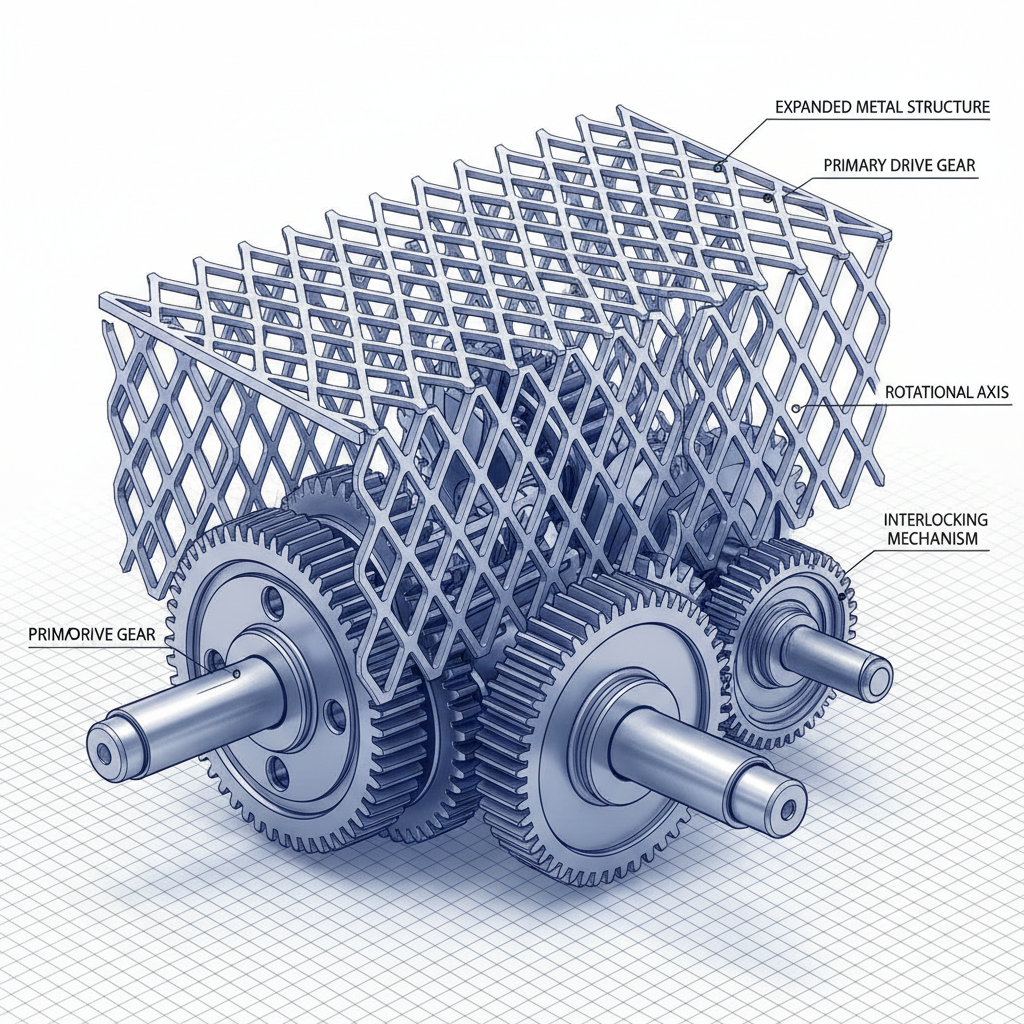
Punched metal uses a die to remove circular or square discs, resulting in a flat sheet with precise hole diameters. Expanded metal is slit and stretched, creating diamond-shaped openings. Punched metal is superior for precise filtration where a specific particle size must be blocked. Expanded metal is generally more rigid and offers better grip, making it ideal for anti-slip walkways.
Verification should involve a three-step process: first, request a sample showing the edge distance to ensure the holes are not too close to the trim line. Second, use a digital caliper to measure the pitch and diameter at multiple points across a large sheet. Third, inspect the "burrs" on the reverse side; clean edges indicate well-maintained tooling and higher precision, reducing the risk of snagging or coating failure.
The industry is moving toward "functional grading," where the perforation pattern varies across a single panel to optimize for different needs (e.g., more open at the bottom for drainage and tighter at the top for security). Additionally, the integration of smart coatings that can change color based on temperature or repel contaminants using nanostructures is becoming a focus for high-end architectural and industrial applications.
The selection of perforated metal is a complex optimization problem involving material science, structural mechanics, and environmental analysis. By moving beyond basic cost-per-sheet metrics and focusing on open-area efficiency and corrosion kinetics, engineers can ensure that their screening solutions provide long-term reliability without unnecessary over-specification.
Whether implementing high-security perimeters or industrial filtration systems, the synergy between precise manufacturing and correct material choice is paramount. For those seeking robust, field-tested barrier solutions, exploring the technical specifications of perforated metal suppliers provides a baseline for achieving the necessary balance between aesthetics and industrial-grade safety.

Subscribe now!
Stay up to date with the latest on Fry Steeland industry news.