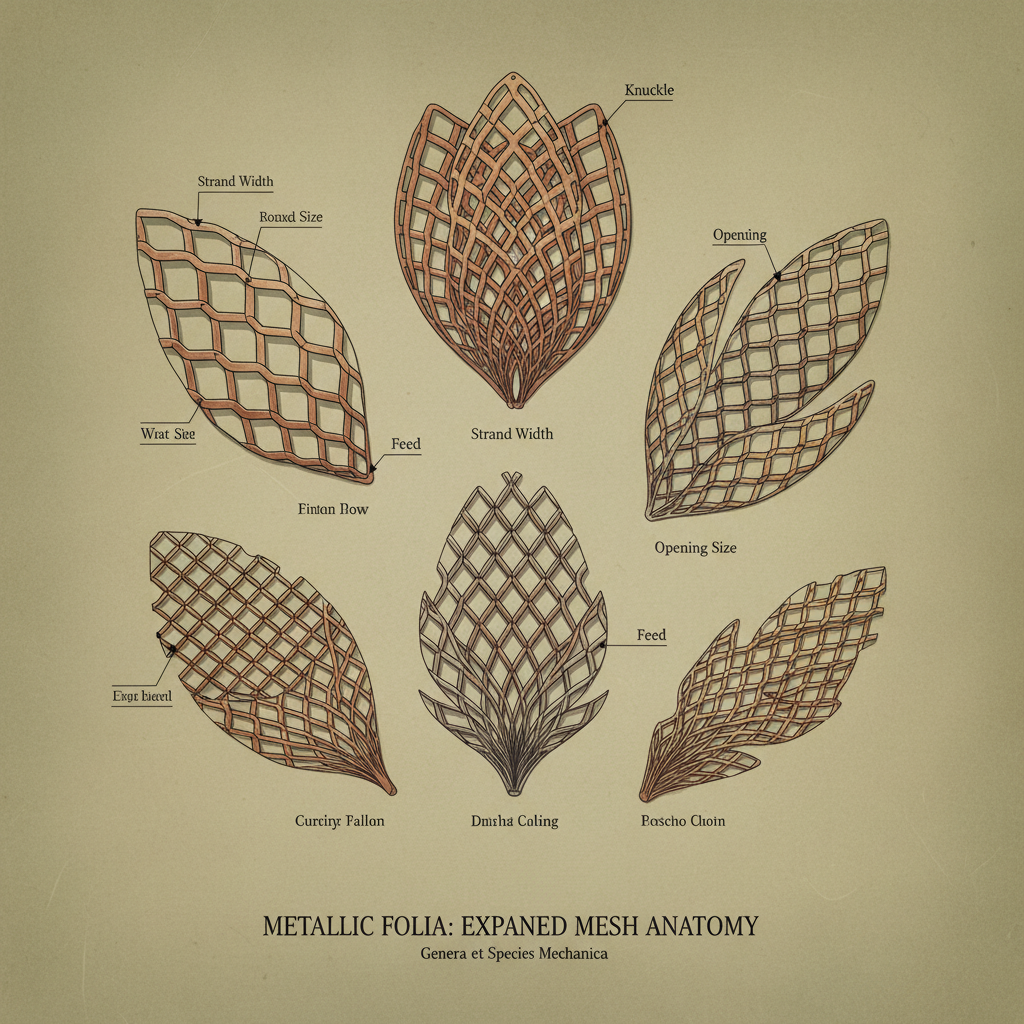
Aluminum expanded metal mesh has emerged as a cornerstone material in modern architectural and industrial design, offering a unique blend of structural integrity and aesthetic versatility. By utilizing a specialized slitting and stretching process, this material creates a diamond-shaped opening pattern without the need for welding or fasteners, resulting in a seamless, high-strength grid.
Across the globe, the demand for lightweight yet durable screening solutions has pushed the boundaries of metal fabrication. From urban facades to intricate interior partitions, the ability to customize the aperture size and strand width allows engineers and designers to balance airflow, light filtration, and security requirements precisely.
For those seeking high-end finishes and extreme weather resistance, the aluminum expanded metal mesh with PVC coating provides an unparalleled shield against corrosion. This combination of aluminum's natural lightness and the protective polymer layer ensures long-term performance in the most demanding environments.
Global Industry Context of Aluminum Expanded Metal Mesh
In the current global construction landscape, the shift toward sustainable and lightweight materials is more pronounced than ever. International standards, such as those set by ISO for aluminum alloys, emphasize the need for materials that reduce the overall carbon footprint of a building while maintaining rigorous safety and durability benchmarks. The adoption of aluminum expanded metal mesh has surged as cities move toward "green architecture," where ventilation and natural light are prioritized.
The primary challenge addressed by this material is the conflict between security and transparency. Traditional solid barriers often obstruct visibility and air circulation, whereas standard wire meshes can be prone to corrosion or lack the rigidity required for industrial loads. By utilizing an expanded structure, industries can achieve a high open-area percentage while retaining the inherent strength of the base aluminum sheet.
Defining the Mechanics of Expanded Aluminum
At its core, aluminum expanded metal mesh is a multifunctional metal sheet that has been slit and stretched into a diamond-shaped pattern. Unlike woven wire mesh, which involves intertwining separate wires, expanded metal is manufactured from a single piece of material. This means there are no welds to break or wires to unravel, ensuring a monolithic structure that is exceptionally stable under tension and pressure.
From an industrial perspective, this process is highly efficient. Because the material is simply reshaped rather than added to, there is virtually no waste during production, making it an eco-friendly choice for large-scale projects. The resulting geometry allows for a high strength-to-weight ratio, which is critical for aerospace, automotive, and high-rise architectural cladding applications.
Modern humanitarian and urban needs further drive the demand for this material. In disaster-prone areas or rapid-urbanization zones, the ease of installation and lightweight nature of aluminum make it an ideal choice for temporary screening, security barriers, and ventilation grills that can be deployed and replaced with minimal logistical overhead.
Core Components of High-Performance Mesh
The effectiveness of an aluminum expanded metal mesh depends largely on its geometric configuration. The "Long Way of the Diamond" (LWD) and "Short Way of the Diamond" (SWD) determine the mesh's visual transparency and structural stiffness. By adjusting these parameters, manufacturers can create everything from fine, decorative screens to heavy-duty industrial walkways.
A critical component for longevity is the surface treatment. While aluminum naturally forms a protective oxide layer, the addition of a PVC coating transforms the aluminum expanded metal mesh into a powerhouse of corrosion resistance. This polymer layer prevents oxidation in salt-heavy coastal environments and protects the metal from chemical exposure in industrial plants.
Furthermore, the grade of aluminum used—typically 1000, 3000, or 5000 series alloys—dictates the mechanical properties. Higher-grade alloys provide the necessary tensile strength for structural applications, ensuring that the aluminum expanded metal mesh does not deform under load, while remaining flexible enough for custom bending and shaping.
Comparative Performance Metrics
When evaluating material choices for architectural screening, professionals often compare expanded metal against perforated sheets and woven wire. The expanded process offers a distinct advantage in terms of structural rigidity per unit of weight. Because the strands are integrated, the mesh resists sagging and warping far better than woven alternatives over long spans.
Moreover, the cost-efficiency of the expanded process is a major driver. Since no material is removed during the punching process (unlike perforated metal), the raw material utilization is nearly 100%. This leads to a more sustainable production cycle and a lower end-cost for the consumer without compromising the quality of the final product.
Performance Analysis of Aluminum Expanded Metal Mesh Variants
Global Applications and Real-World Use Cases
In the realm of modern architecture, aluminum expanded metal mesh is frequently used for building envelopes and curtain walls. In cities like Singapore and Dubai, where extreme heat and humidity are prevalent, these meshes act as solar shades, reducing the heat load on buildings while allowing natural airflow to penetrate the interior. This significantly lowers energy consumption for cooling systems.
Beyond aesthetics, industrial applications are vast. In chemical processing plants and food production facilities, PVC-coated aluminum mesh is used for safety guards and filtration screens. Its non-reactive nature and resistance to caustic cleaning agents make it a superior choice over galvanized steel, ensuring that contamination is minimized and equipment lifespan is extended.
Long-Term Value and Sustainability
The long-term value of investing in high-quality aluminum mesh lies in its lifecycle cost. While the initial investment for PVC-coated aluminum may be higher than basic steel, the absence of rust and the need for minimal maintenance result in significant savings over a 20-year period. There is a profound peace of mind that comes with knowing a structural element will not degrade in a saline or humid environment.
From a sustainability angle, aluminum is one of the most recyclable materials on earth. At the end of a building's lifecycle, the mesh can be melted down and repurposed with only a fraction of the energy required for primary production. This aligns with the global circular economy goals and provides a logical path for developers to achieve LEED or BREEAM certifications.
Furthermore, the use of aluminum expands the possibilities for innovation in safety. By providing a rigid yet lightweight barrier, it ensures the dignity and safety of occupants in public spaces—such as airports and stadiums—where crowd control must be balanced with an open, non-threatening visual environment.
Future Innovations in Metal Mesh Fabrication
The future of aluminum expanded metal mesh is being shaped by digital transformation and advanced coatings. We are seeing the rise of "smart meshes" that incorporate photocatalytic coatings, which can actually break down smog and pollutants from the air when exposed to UV light. This turns every building facade into a giant air purifier, merging architecture with environmental activism.
Automation and AI-driven design are also allowing for "gradient mesh," where the aperture size changes dynamically across a single panel. This allows architects to create organic, fluid shapes that optimize light based on the sun's path throughout the day, moving beyond the static diamond patterns of the past.
As green energy becomes the global priority, these materials are also being integrated into hydrogen storage facilities and EV charging hubs, where lightweight, non-sparking, and corrosion-resistant barriers are mandatory for safety.
Core Analysis of Future Innovations in Aluminum Expanded Metal Mesh
| Innovation Type |
Primary Benefit |
Industry Impact |
Sustainability Score |
| Photocatalytic Coating |
Air Purification |
Urban Planning |
10/10 |
| AI Gradient Design |
Optimized Lighting |
Luxury Architecture |
8/10 |
| Nano-Polymer PVC |
Extreme Corrosion Resistance |
Marine Engineering |
9/10 |
| 3D-Contoured Stretching |
Complex Geometry |
Automotive/Aerospace |
7/10 |
| Recycled Alloy Integration |
Zero Raw Mining |
General Construction |
10/10 |
| Hybrid Al-Steel Composites |
Ultra-High Load Bearing |
Bridge Infrastructure |
6/10 |
FAQS
The primary difference lies in the manufacturing process. Perforated metal is created by punching holes out of a sheet, which results in material waste (scrap). Expanded metal is created by slitting and stretching the sheet, meaning no material is removed. This makes expanded metal generally stronger and more cost-effective, as it utilizes the full sheet of aluminum without waste.
While aluminum is naturally corrosion-resistant due to its oxide layer, PVC coating is highly recommended for environments with high salinity, extreme chemical exposure, or where specific aesthetic colors are required. The coating provides an extra barrier that prevents pitting and surface degradation, significantly extending the product's lifespan in harsh industrial or coastal settings.
Yes, aluminum expanded metal mesh is highly customizable. By adjusting the slitting width and the stretching distance, manufacturers can control the "Open Area Percentage." Whether you need a tight mesh for security or a wide-open diamond for maximum ventilation and light penetration, the parameters can be tailored to meet your exact engineering specifications.
It is typically installed using a framing system of aluminum extrusions. The mesh panels are either bolted, riveted, or welded to the frame. For a more seamless look, "hidden" fastening systems are often used, where the mesh is tucked into a U-channel, allowing the beautiful diamond pattern to be the focal point without visible hardware.
Yes, provided the correct gauge and alloy are selected. Heavy-duty aluminum expanded metal is frequently used for catwalks and platforms because it provides excellent grip (slip resistance) and high load-bearing capacity while being much lighter than steel. It is essential to consult a structural engineer to determine the required strand thickness for the intended load.
Maintenance is minimal. For most applications, a simple wash with water and a mild detergent is sufficient to remove dust and debris. Because the PVC coating prevents corrosion, there is no need for painting or rust-treatment. Avoid using highly abrasive scrubbers that could scratch the polymer surface.
Conclusion
In summary, aluminum expanded metal mesh represents a perfect synergy of engineering efficiency and architectural beauty. From its waste-free production process to its exceptional strength-to-weight ratio and the added protection of PVC coating, it solves the critical industry challenge of balancing security, ventilation, and durability. Whether applied in urban facades or heavy industrial filters, its versatility makes it an indispensable tool for modern construction.
Looking forward, the integration of smart coatings and AI-driven designs will only further elevate the role of this material in creating sustainable, breathable, and resilient cities. For professionals seeking to optimize their projects with high-performance metal solutions, investing in customized aluminum expanded mesh is a strategic move toward longevity and innovation. Visit our website for more details: www.ztwiremesh.com