When searching for the right industrial flooring or platform solutions, the decision to buy steel grating often comes down to a balance between structural load-bearing capacity and environmental resistance. For procurement managers in heavy industry, selecting a grating system is not merely about filling a gap but about ensuring long-term operational safety and minimizing maintenance downtime in high-traffic or corrosive areas.
The complexity of this choice increases when considering the diverse range of metal products available, from 3D Curved Fences to various expanded metal meshes. While security fencing protects the perimeter, steel grating manages the internal infrastructure's stability. The synergy between these components—such as using anti-slip toothed steel grating in wet environments—determines the overall safety rating of an industrial site.
Understanding the technical nuances of load distribution and material coating is essential for making an informed investment. This guide analyzes the critical specifications and procurement logic required to buy steel grating that meets international safety standards while optimizing the total cost of ownership for your facility.


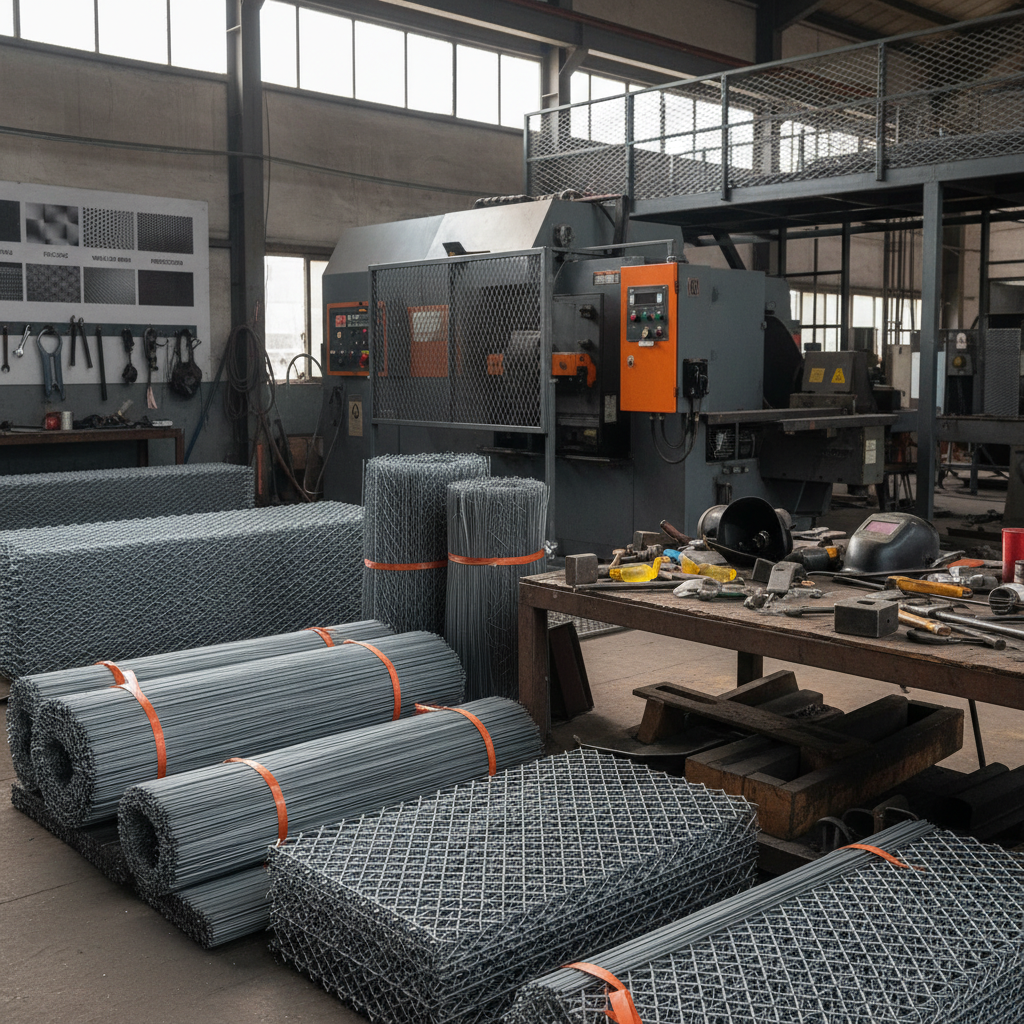
Steel grating is an engineered structural system composed of load-bearing bars and transverse cross-bars, welded or pressed together to create a high-strength open grid. Unlike solid plates, the open design allows for the passage of air, light, and liquids, which is critical for ventilation and drainage in industrial settings. The structural integrity relies on the depth of the bearing bars and the precision of the welds, ensuring that vertical loads are distributed evenly across the support frame.
From a manufacturing perspective, the precision of the grid spacing determines the grating's ability to prevent small objects from falling through while maintaining maximum porosity. This balance is key when integrating grating with other metal products, such as the protective barriers found in airport fences or the reinforced structures of bridge sound barriers, where weight reduction cannot compromise safety.
The primary determinant of grating performance is the material grade and surface treatment. In highly corrosive environments, such as chemical plants or coastal infrastructure, hot-dipped galvanization is the industry standard, providing a thick zinc layer that prevents oxidation. For extreme chemical exposure, stainless steel or composite pattern steel grating is often preferred to avoid the rapid degradation associated with standard carbon steel.
Another vital factor is the "Anti-Slip" requirement. In areas prone to oil spills or moisture, the addition of serrated edges—seen in anti-slip toothed steel grating—significantly increases the coefficient of friction. This modification prevents worker slips and falls, transforming a simple structural component into a critical safety feature.
Finally, load-bearing capacity must be calculated based on the maximum expected point load and distributed load. Factors such as the span between supports and the bar thickness (gauge) directly impact the deflection rate. A grating that exceeds the required specifications may lead to unnecessary costs, while under-specified grating poses a severe risk of structural failure.
The value of high-quality steel grating extends beyond its initial installation. By reducing the weight of the flooring compared to concrete or solid steel, companies can lower the structural requirements for the supporting beams, leading to overall project savings. Furthermore, the transparency of the grating allows for easier inspection of the piping and cabling running beneath the platforms.
Selecting the correct grating profile reduces long-term maintenance costs by up to 30% in corrosive environments, as high-quality galvanization eliminates the need for frequent repainting and prevents premature structural replacement.
Moreover, the integration of specialized grating with other security systems—such as the enclosure series or double wire mesh fences—creates a comprehensive safety ecosystem. When a facility uses consistent material standards across its grating and fencing, it ensures a uniform response to environmental stress and a streamlined procurement process for replacement parts.
Different applications demand different technical priorities. In a warehouse setting, the focus is typically on load capacity and cost-efficiency. However, in a refinery, the priority shifts toward corrosion resistance and anti-slip capabilities. This variation means that a "one size fits all" approach to purchasing steel grating is often inefficient.
The following data represents the relative priority of key performance indicators (KPIs) based on common industrial application requirements, highlighting how the focus shifts from load-bearing to environmental resilience depending on the site.
Industrial platforms in the oil and gas sector are among the most demanding environments for steel grating. These areas require a combination of high load-bearing capacity and extreme corrosion resistance due to the presence of saltwater and hydrocarbons. Here, the use of specialized coatings and precise welding is non-negotiable to prevent structural fatigue.
In urban infrastructure, such as drainage channels and subway ventilation grates, the focus shifts toward pedestrian safety and debris filtration. The use of bubble hole anti-slip perforated mesh or crocodile mouth non-slip perforated mesh in these contexts ensures that water flows freely while preventing accidents, demonstrating the versatility of metal wire products in public safety.
The industry is moving away from simple paint-based coatings toward advanced chemical bonding and multi-layer galvanization. Modern standards emphasize the "lifecycle value" rather than the initial purchase price. This shift is evident in the growing adoption of aluminum expanded metal mesh and copper expanded metal mesh for specialized architectural and industrial roles where weight and conductivity are more important than raw strength.
Sustainability is also playing a larger role. The ability to recycle steel grating at the end of its lifecycle makes it a more sustainable choice than plastic-composite alternatives. Manufacturers are now optimizing the weight-to-strength ratio, using advanced CAD modeling to ensure that no excess material is used, thereby reducing the carbon footprint of the production process.
Furthermore, the integration of smart monitoring—such as sensors embedded in the support structure of the grating—is becoming a plausible direction for future infrastructure, allowing facility managers to detect structural stress before it leads to failure.
One of the most significant challenges when deciding to buy steel grating is the mismatch between specified load requirements and actual site conditions. Over-engineering leads to wasted budget, while under-engineering creates a liability. The solution lies in a detailed site analysis and a collaborative approach with the manufacturer to determine the optimal bar spacing and thickness.
Compatibility is another frequent hurdle. Grating must fit perfectly within the support angles to avoid gaps that could cause tripping hazards. Custom fabrication, utilizing precise drawings and tolerances, is the only way to ensure a seamless installation, especially in complex projects involving bridge sound barriers or customized community sound barriers.
Lastly, lead times and logistics can impact project timelines. Sourcing from a manufacturer with a broad product range—including everything from barbed wire to complex expanded metal mesh—often streamlines the supply chain, reducing the number of vendors and ensuring consistency in material quality across the site.
| Environment | Recommended Material | Key Feature | Maintenance Level |
|---|---|---|---|
| Heavy Industrial | Carbon Steel (HDG) | High Load Capacity | Moderate |
| Chemical Plant | Stainless Steel | Acid Resistance | Low |
| Public Walkway | Galvanized Steel | Serrated Anti-Slip | Moderate |
| Coastal/Marine | Hot-Dipped Zinc | Salt Spray Resistance | High |
| Architectural | Aluminum/Copper | Aesthetic/Lightweight | Low |
| Wet/Oily Area | Toothed Steel | Maximum Friction | Moderate |
Serrated steel grating features a "toothed" top surface that provides significantly higher traction, making it ideal for environments with oil, water, or ice. Plain grating has a smooth surface and is typically used in dry areas where high friction is not a primary safety requirement. The choice depends entirely on the risk of slipping in the specific application area.
You must identify the maximum possible load (point load and uniformly distributed load) and the span between the supports. Using a load table provided by the manufacturer, you can match these values to the appropriate bar thickness and spacing. It is always recommended to include a safety factor of at least 1.5 to 2.0 to account for unexpected surges in weight.
Yes, for industrial use, hot-dipped galvanizing is far superior. It creates a much thicker zinc layer that is chemically bonded to the steel, providing long-term protection against corrosion. Electro-galvanizing provides a thinner layer that is primarily aesthetic and wears away quickly in harsh outdoor or chemical environments.
Absolutely. While primarily functional, decorative expanded metal mesh and customized steel grating are frequently used in modern architecture for facades, ceiling panels, and balcony guardrails. In these cases, the focus shifts from load-bearing capacity to visual symmetry, material color, and light filtration properties.
The lifespan varies by environment. In a dry, indoor setting, galvanized steel can last over 30 years. In a highly corrosive marine or chemical environment, it may last 10-15 years before requiring significant maintenance or replacement. Regular inspections for rust spots and structural deflection are key to extending the service life.
The most common causes are severe corrosion that thins the bearing bars, overloading beyond the design capacity, and improper installation where the grating is not adequately supported at the edges. Ensuring the correct material grade and adhering to strict installation tolerances are the best ways to prevent these failures.
The decision to buy steel grating is a strategic move that impacts the safety, efficiency, and longevity of an industrial facility. By focusing on the technical synergy between material selection, load calculations, and environmental resistance, procurement officers can ensure a solution that minimizes risk and maximizes operational uptime. The shift toward high-performance coatings and anti-slip designs reflects a broader industry commitment to workplace safety and sustainability.
For those requiring precision-engineered metal solutions—from heavy-duty industrial grating to complex security fencing—partnering with an experienced manufacturer is essential. We invite you to explore the full range of technical specifications and customization options available at www.ztwiremesh.com to find the optimal configuration for your specific infrastructure needs.

Subscribe now!
Stay up to date with the latest on Fry Steeland industry news.