

Introduction to Perforated Metal Sheet Doors and Industry Trends
In modern industrial and architectural design, the integration of functionality, aesthetics, and robust performance is paramount. Among the innovative solutions addressing these multifaceted demands, the perforated metal sheet door stands out as a versatile and increasingly vital component. These doors, crafted from metal sheets precisely punched with various patterns of holes, offer significant advantages in terms of ventilation, light diffusion, security, and visual appeal. Their application spans from heavy industrial facilities to sophisticated commercial buildings, reflecting a growing appreciation for their engineered capabilities.
The market for perforated metal products is experiencing robust growth, driven by several key industry trends. Firstly, there is an escalating demand for sustainable building materials and designs. Perforated metals, by facilitating natural airflow and optimizing light distribution, contribute significantly to energy efficiency in buildings, aligning with green building initiatives. Secondly, advancements in manufacturing technologies, particularly in CNC punching and laser cutting, allow for greater precision and complexity in perforation patterns, opening new avenues for aesthetic and functional designs, including intricate decorative punched metal sheets. This enables designers to push boundaries, creating bespoke architectural elements like elaborate perforated metal sheet cladding or bespoke security screens.
Furthermore, the ongoing digitalization of design and manufacturing processes has popularized the use of perforated metal sheet CAD drawing, streamlining customization and ensuring precision from concept to final product. The integration of Building Information Modeling (BIM) further enhances project coordination and material optimization. Finally, the emphasis on enhanced security and safety standards across various sectors fuels the demand for durable and structurally sound barrier solutions, where a perforated metal sheet door often provides an optimal balance of protection and visibility. Innovative applications, such as the development of micro perforated metal sheet for advanced acoustic panels and EMI shielding, also highlight the dynamic evolution of this product category.
Manufacturing Process Flow of Perforated Metal Sheet Doors
The production of high-quality perforated metal sheet door involves a series of precise and controlled steps, ensuring the final product meets stringent performance and aesthetic criteria. Zhongtai Bending Perforated Metal China Factory adheres to a rigorous manufacturing protocol, utilizing advanced machinery and skilled craftsmanship.
Key Materials:
- Stainless Steel (e.g., 304, 316): Chosen for superior corrosion resistance, high strength-to-weight ratio, and hygienic properties, ideal for food processing, chemical, and medical environments.
- Galvanized Steel: Offers excellent resistance to rust and environmental degradation due to its zinc coating, making it suitable for outdoor and high-humidity applications.
- Carbon Steel: Provides high strength and durability at a cost-effective price, often used where specific corrosion resistance is not the primary concern but can be painted or powder-coated.
- Aluminum Alloys (e.g., 1100, 3003, 5052): Lightweight, non-corrosive, and highly malleable, perfect for architectural applications where weight is a factor or specific finishes are desired.
- Other Alloys: Including brass, copper, or titanium for specialized applications requiring unique aesthetic or chemical properties.
Manufacturing Steps:
High-grade raw metal sheets are selected based on client specifications and application requirements, considering factors like alloy type, thickness, and sheet size.
Metal sheets are precisely cut to the required dimensions using industrial shears or laser cutters, ensuring minimal material waste and accurate sizing.
This is the core process. CNC punching machines precisely create the desired hole patterns (round, square, slotted, decorative) with specified open areas and pitch. For intricate designs or smaller holes, laser cutting technology can be employed. This step is critical for forming the characteristic iron sheet with holes.
After perforation, sheets may undergo leveling to ensure flatness and deburring to remove any sharp edges or burrs, enhancing safety and finish quality.
For door applications, the perforated sheets are then precisely bent and formed into door panels or frame components using press brakes or specialized bending machines, following design specifications from a perforated metal sheet CAD drawing.
Individual components are welded together to form the complete door structure, ensuring structural integrity and precise alignment.
Doors undergo surface treatments such as powder coating, anodizing, galvanizing, or painting. These finishes enhance corrosion resistance, durability, and aesthetics.
Each perforated metal sheet door undergoes rigorous inspection to ensure adherence to specified dimensions, perforation patterns, finish quality, and structural integrity. This includes checks against standards like ISO 9001:2015 and relevant ASTM specifications.

Figure 1: Illustration of a perforated metal sheet during the manufacturing process.
Testing Standards & Service Life:
Our products are manufactured to meet or exceed international quality standards, including ISO 9001:2015 for quality management systems. Specific material and performance tests may adhere to ASTM standards (e.g., ASTM A240 for stainless steel, ASTM B209 for aluminum) for mechanical properties, corrosion resistance, and dimensional tolerances. With proper material selection and finishing, a perforated metal sheet door can achieve an extended service life of 20-30 years or more, even in challenging industrial environments.
Target Industries & Advantages:
These doors are critical components in a diverse array of sectors, including:
- Petrochemical: Providing ventilation for hazardous areas while maintaining security and structural integrity.
- Metallurgy: Withstanding harsh, high-temperature environments and abrasive conditions.
- Water Supply & Drainage: Offering corrosion resistance and ventilation in humid or chemically exposed settings.
- HVAC Systems: Integrated as part of air handling units (AHU), facilitating precise airflow control and sound attenuation.
- Architectural & Commercial: Enhancing building aesthetics, providing natural light, and ensuring secure yet visible access points.
- Security & Data Centers: Allowing heat dissipation and controlled access without compromising security.
Key advantages include significant energy savings through optimized airflow and natural light harvesting, superior corrosion resistance when fabricated from suitable materials, and inherent strength for security. The precise perforation patterns also contribute to sound attenuation, particularly with specialized micro perforated metal sheet designs, which can be crucial in industrial or commercial settings requiring noise control.
Technical Specifications and Performance Parameters
Understanding the technical specifications of a perforated metal sheet door is crucial for ensuring its optimal performance in specific applications. These parameters directly influence factors such as airflow, light transmission, sound absorption, strength, and overall durability. Zhongtai Bending Perforated Metal offers a wide range of customizable options to meet diverse engineering requirements.
Key Parameters:
- Material Type: Stainless Steel (304, 316), Carbon Steel, Galvanized Steel, Aluminum (1100, 3003, 5052), Copper, Brass, etc.
- Sheet Thickness: Typically ranges from 0.5 mm to 10 mm, depending on structural demands and desired rigidity.
- Hole Pattern: Round, square, slotted, hexagonal, decorative, custom designs.
- Hole Size: From 0.5 mm for micro perforated metal sheet applications up to 50 mm or more for heavy-duty ventilation.
- Pitch: The distance between the centers of two adjacent holes. This, along with hole size, determines the open area.
- Open Area Percentage: The ratio of the area of the holes to the total area of the sheet, expressed as a percentage. This impacts airflow, light transmission, and acoustic properties. Typical ranges are 20% to 60%.
- Margin: The unperforated area along the edges of the sheet, crucial for structural integrity and mounting.
- Surface Finish: Mill finish, polished, brushed, powder coated, anodized, galvanized.
- Door Dimensions: Custom fabricated to specific width, height, and frame depth requirements.
Product Specification Table: Zhongtai Bending Perforated Metal
| Parameter | Typical Range / Option | Benefit / Application |
|---|---|---|
| Material | Stainless Steel (304, 316L), Galvanized Steel, Aluminum (3003, 5052), Carbon Steel | Corrosion resistance, strength-to-weight, cost-effectiveness, specific aesthetic. |
| Sheet Thickness | 0.8 mm - 6.0 mm (custom up to 10 mm) | Durability, structural integrity, weight optimization. |
| Hole Diameter | 1.0 mm - 25.0 mm (custom for micro or large holes) | Airflow, light diffusion, acoustic performance, aesthetics. |
| Hole Pattern | Round (staggered/straight), Square, Slotted, Hexagonal, Decorative, Honeycomb | Aesthetics, specific flow characteristics, structural rigidity (e.g., honeycomb perforated sheet metal). |
| Open Area (%) | 20% - 60% (customizable based on application) | Ventilation, light transmission, sound absorption, privacy. |
| Finishing | Powder Coating, Anodizing, Galvanizing, Polishing, Painting | Corrosion protection, color customization, aesthetic appeal. |
| Standard Sizes | 1000x2000mm, 1220x2440mm, 1500x3000mm (custom fabrication) | Fit for standard door openings; custom sizes reduce waste. |
The choice of hole pattern, such as the distinct geometric strength of honeycomb perforated sheet designs, can significantly influence the door's structural integrity and aesthetic. Similarly, the percentage of open area is critical; a higher open area facilitates greater airflow and light, while a lower open area provides increased privacy and structural strength. For applications demanding precise acoustic properties, specifically designed micro perforated metal sheet with extremely small holes can provide exceptional sound absorption without compromising airflow. The precision enabled by perforated metal sheet CAD drawing ensures that every parameter is met with exacting detail.
Application Scenarios and Technical Advantages
The versatility of the perforated metal sheet door allows for its deployment across an extensive range of sectors, each benefiting from its unique combination of technical advantages. From enhancing building performance to ensuring industrial safety, these doors are engineered solutions for complex requirements.
Typical Application Scenarios:
- HVAC & Data Centers: Perforated doors and panels are indispensable for managing airflow within HVAC systems and cooling racks in data centers. They facilitate efficient heat dissipation, preventing equipment overheating and contributing to energy savings. The precise open area allows for controlled air distribution.
- Industrial Facilities & Warehouses: Providing security for restricted areas while allowing for ventilation and visibility. They can be installed as partition doors, equipment enclosures, or security gates, often utilizing robust drilled metal sheet designs for enhanced impact resistance.
- Commercial & Retail Spaces: Used as aesthetically pleasing security gates after hours, storefront grilles, or decorative dividers. They allow for visibility of merchandise while providing a physical barrier. The use of decorative punched metal sheets adds a modern, sophisticated touch.
- Architectural Facades & Partitions: Beyond doors, perforated metal finds extensive use as perforated metal sheet cladding for building exteriors, sunshades, and interior partitions. This optimizes natural light, controls solar gain, and contributes to the building's aesthetic identity.
- Noise Control Barriers: Especially when using micro perforated metal sheet with specific backing materials, these doors can form part of effective acoustic management systems in noisy environments like factories or auditoriums.
- Food Processing & Pharmaceutical: Stainless steel perforated doors provide hygienic, corrosion-resistant barriers that can withstand frequent cleaning and exposure to harsh chemicals.
Technical Advantages:
- Optimized Ventilation & Airflow: The primary advantage, allowing controlled air exchange without compromising security or privacy. This is crucial for temperature regulation and fresh air circulation, leading to substantial energy savings by reducing reliance on mechanical ventilation.
- Light Diffusion & Glare Reduction: Perforations diffuse natural light, reducing harsh glare and creating a more comfortable interior environment while potentially lowering artificial lighting costs.
- Enhanced Security: While appearing lightweight, the structural integrity of a well-engineered perforated metal sheet door provides robust physical security, deterring unauthorized access. Materials like stainless steel or heavy-gauge galvanized steel offer significant resistance to forced entry.
- Corrosion Resistance: When fabricated from materials like stainless steel or galvanized steel, these doors offer exceptional longevity, resisting rust and degradation even in aggressive environments (e.g., petrochemical plants, coastal regions).
- Aesthetic Versatility: Available in a vast array of patterns, finishes, and colors, allowing architects and designers to integrate them seamlessly into diverse architectural styles, from industrial chic to contemporary elegance.
- Sound Attenuation: Specific perforation patterns and backing materials can significantly absorb sound waves, contributing to quieter working or living environments. Honeycomb perforated sheet designs can also offer unique acoustic properties.
- Lightweight Yet Strong: The perforation process reduces the overall weight of the metal sheet while maintaining significant structural strength, making installation and operation easier without sacrificing durability.
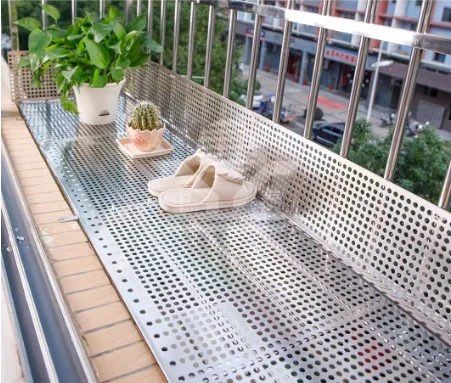
Figure 2: Perforated metal sheets utilized in an industrial application.
Vendor Comparison and Customized Solutions
Selecting the right supplier for a perforated metal sheet door is a critical decision that impacts project timelines, budget, and long-term performance. While many manufacturers offer perforated metal products, key differentiators emerge when evaluating true capabilities in precision engineering, material quality, and customization.
Key Factors for Vendor Comparison:
- Manufacturing Precision & Technology: Does the vendor utilize advanced CNC punching, laser cutting, and bending technologies? Precision is vital for meeting exact specifications outlined in perforated metal sheet CAD drawing.
- Material Sourcing & Quality Control: Access to a wide range of high-grade raw materials and stringent QC processes ensures product longevity and adherence to standards.
- Customization Capabilities: The ability to produce bespoke hole patterns, shapes, sizes, and finishes (e.g., custom drilled metal strips or specialized decorative punched metal sheets) is crucial for unique projects.
- Certifications & Compliance: Adherence to international standards like ISO 9001:2015, along with material-specific certifications (e.g., ASTM), indicates a commitment to quality.
- Technical Support & Design Assistance: A capable vendor offers expert advice, engineering support, and assistance with complex designs.
- Lead Time & Logistics: Efficiency in production and reliable shipping are essential for project scheduling.
- After-Sales Service & Warranty: A commitment to supporting the product throughout its lifecycle.
Product Comparison Table (Illustrative):
| Feature | Zhongtai Bending Perforated Metal | Generic Competitor A | Generic Competitor B |
|---|---|---|---|
| Manufacturing Precision | High (CNC & Laser) | Medium (Standard Punching) | Varies |
| Material Range | Extensive (SS, Al, Galv, CS, Copper, etc.) | Limited (Standard SS, CS) | Moderate |
| Custom Hole Patterns | Full Customization Available | Limited Standard Patterns | Moderate Customization |
| Certifications | ISO 9001:2015, Material ASTM | Basic QC | ISO (not always latest) |
| Technical Support | Comprehensive Design & Engineering | Standard Sales Support | Limited Technical Guidance |
| Lead Time (typical) | Efficient (3-5 weeks, project dependent) | 4-8 weeks | Varies widely |
Zhongtai distinguishes itself through its commitment to leveraging cutting-edge technology for superior precision and its extensive customization capabilities. This focus ensures that clients receive not just a product, but a tailor-made solution perfectly aligned with their project's unique demands.
Customized Solutions for Perforated Metal Sheet Doors:
No two projects are identical, and this principle is especially true for architectural and industrial applications involving perforated metal sheet door. Zhongtai specializes in providing bespoke solutions, working closely with clients from conceptualization to final production.
- Design Consultation: Our engineers collaborate with clients to optimize designs for specific aesthetic, functional, and performance objectives, translating conceptual ideas into detailed perforated metal sheet CAD drawing.
- Material & Gauge Selection: Guiding clients through the selection of the most appropriate material (e.g., stainless steel for high corrosion resistance, aluminum for lightweight applications) and sheet thickness for optimal structural integrity and longevity. This includes specialized products like drilled metal strips for custom reinforcement.
- Perforation Pattern & Open Area: Crafting unique hole patterns – whether it's a specific round hole arrangement, a functional honeycomb perforated sheet, or an intricate decorative pattern – to achieve desired airflow, light transmission, privacy, and visual impact.
- Custom Fabrication: Producing doors with non-standard dimensions, complex bending, special edge treatments, and integration of hardware mounting points.
- Specialized Finishes: Applying a wide array of finishes, including custom color powder coatings, anodizing for enhanced corrosion resistance and aesthetics, or specialized textures.
This bespoke approach ensures that each perforated metal sheet door is not merely a product but a highly engineered component that integrates flawlessly into its intended environment, delivering maximum value and performance.
Application Case Studies and Customer Experience
Real-world applications demonstrate the tangible benefits and versatility of Zhongtai's perforated metal sheet door solutions. These case studies highlight how thoughtful design and superior manufacturing address specific challenges and deliver measurable improvements.
Case Study 1: HVAC System Optimization in a Pharmaceutical Plant
- Challenge: A large pharmaceutical manufacturing facility required efficient and contaminant-free airflow within its critical cleanroom areas and HVAC units. Existing solid doors restricted air circulation, leading to uneven temperature distribution and increased energy consumption for mechanical ventilation.
- Solution: Zhongtai supplied custom-fabricated stainless steel perforated metal sheet door panels for air handling unit access and critical room entries. These doors featured a precise round hole pattern with a 45% open area, optimized for controlled airflow. The use of Grade 316L stainless steel ensured maximum corrosion resistance against cleaning agents and sterile environments.
- Outcome: The installation resulted in a 15% improvement in air circulation efficiency, leading to a noticeable reduction in HVAC energy consumption. Temperature uniformity across the cleanrooms improved by 2°C, vital for process stability. The client reported enhanced operational efficiency and a more compliant environment.
- Customer Feedback: "Zhongtai's perforated doors were a game-changer for our facility. The engineering team understood our stringent cleanroom requirements perfectly, delivering a product that not only met but exceeded our expectations for airflow control and durability. Their perforated metal sheet CAD drawing services were instrumental in ensuring a perfect fit."
Case Study 2: Aesthetic and Security Upgrade for a Modern Office Building
- Challenge: A new corporate headquarters aimed for a modern, open aesthetic while requiring robust security for sensitive internal departments and after-hours access. Traditional solid security doors would detract from the design vision.
- Solution: Decorative punched metal sheets were fabricated into custom-sized sliding perforated metal sheet door panels for office entrances and meeting room partitions. An aluminum alloy with a custom hexagonal perforation pattern and a matte black powder coating was chosen to complement the interior design. These doors offered a sophisticated visual filter, allowing light and subtle visibility, while providing a physical barrier.
- Outcome: The project successfully merged high-level security with contemporary architectural design. The perforated doors provided a semi-transparent barrier that maintained an open feel while delineating secure zones. The custom aesthetic received high praise from both employees and visitors, contributing to the building's prestige.
- Customer Feedback: "We needed security solutions that were also works of art. Zhongtai delivered stunning decorative punched metal sheets for our doors that became a focal point. Their precision manufacturing and ability to match our specific color and pattern requirements were exceptional."
Case Study 3: Sound Attenuation and Equipment Protection in a Manufacturing Plant
- Challenge: A heavy machinery manufacturing plant experienced high noise levels from active production zones, impacting worker comfort and requiring robust enclosures for sensitive machinery that still needed ventilation.
- Solution: Zhongtai designed and supplied specialized perforated metal sheet door and panel enclosures utilizing micro perforated metal sheet on the interior facing surfaces, backed by sound-absorbing material. The outer layer used a standard galvanized steel sheet with larger perforations for structural strength and initial air intake. This multi-layered approach provided both sound attenuation and necessary air circulation.
- Outcome: Noise levels within designated work zones were reduced by an average of 10-12 dB, significantly improving the acoustic environment and worker safety compliance. The machinery was effectively protected while benefiting from regulated temperature, extending equipment life.
- Customer Feedback: "The acoustic performance of these specialized iron sheet with holes doors was remarkable. Zhongtai's team provided excellent technical guidance on selecting the right perforation type and backing for our noise reduction goals, and the structural integrity was exactly what we needed for equipment protection."

Figure 3: Close-up of a perforated metal sheet, highlighting hole patterns.
Authoritativeness, Trustworthiness, and Support
Zhongtai Bending Perforated Metal China Factory is committed to establishing and maintaining the highest standards of quality and customer trust. Our operational philosophy is built upon expertise, reliable service, and transparent communication, ensuring client confidence in every perforated metal sheet door and custom solution we provide.
Certifications and Industry Recognition:
- ISO 9001:2015 Certified: Our quality management system is certified to ISO 9001:2015, ensuring consistent product quality, operational efficiency, and continuous improvement across all manufacturing processes.
- Material Compliance: All raw materials are sourced from reputable suppliers and conform to relevant international standards such as ASTM for material composition and mechanical properties.
- Experienced Professionals: With over 20 years of experience in the perforated metal industry, our team possesses deep expertise in material science, engineering design, and fabrication techniques for diverse applications, from simple drilled metal strips to complex perforated metal sheet cladding.
- Global Partnerships: We have successfully partnered with leading engineering firms and industrial clients across various sectors globally, delivering robust and reliable solutions that stand the test of time.
Frequently Asked Questions (FAQ):
A: Lead times vary based on complexity, material availability, and order volume. For standard custom orders, expect 3-5 weeks from design approval to dispatch. Expedited options may be available upon request. Our sales team provides precise estimates upon project assessment.
A: Absolutely. Our expert engineering team offers comprehensive design consultation, helping clients select optimal materials, hole patterns, and finishes. We utilize advanced perforated metal sheet CAD drawing to ensure precision and functionality for your specific needs.
A: We provide a standard 1-year warranty covering manufacturing defects and material integrity. Extended warranties may be available for specific products or projects, as detailed in our contractual agreements.
A: Corrosion resistance is ensured through careful material selection (e.g., marine-grade stainless steel, galvanized steel, aluminum alloys) and appropriate surface finishes (e.g., powder coating, anodizing) tailored to the environmental conditions of the application.
Lead Time and Fulfillment:
Our streamlined manufacturing processes and robust supply chain enable us to offer competitive lead times without compromising quality. Typical lead times for custom perforated metal sheet door orders range from 3 to 5 weeks, depending on design complexity and production queue. We work diligently to meet project deadlines and provide regular updates throughout the production and shipping phases. Global shipping logistics are managed to ensure timely and secure delivery to your site.
Warranty and After-Sales Support:
Zhongtai stands behind the quality of its products. Each perforated metal sheet door is backed by a comprehensive warranty against manufacturing defects. Beyond the warranty period, our dedicated after-sales support team is available to assist with any queries, maintenance advice, or component replacements. Our commitment extends to providing technical assistance to ensure the long-term optimal performance of your investment. For any support needs, clients can reach us via phone or email, and our technical specialists will respond promptly.
Conclusion
The perforated metal sheet door represents a sophisticated confluence of industrial robustness, engineering precision, and architectural elegance. Its ability to concurrently address critical requirements such as ventilation, security, light management, and aesthetic integration makes it an indispensable asset across a multitude of industries. From optimizing HVAC efficiency in data centers to providing secure, visually appealing access in commercial spaces, these doors offer a highly adaptable and durable solution.
As global demand for sustainable, high-performance building and industrial components continues to rise, the role of custom-fabricated perforated metal solutions becomes increasingly prominent. Zhongtai Bending Perforated Metal stands at the forefront of this evolution, leveraging decades of expertise, advanced manufacturing capabilities, and a deep commitment to customer satisfaction to deliver superior perforated metal sheet door products. By combining technical excellence with bespoke design, we empower our clients to achieve their most ambitious project goals, ensuring longevity, efficiency, and aesthetic distinction.
References
- ISO 9001:2015 Quality management systems — Requirements. International Organization for Standardization.
- ASTM International. Standard Specification for Perforated Metal. Available at: astm.org
- "Perforated Metals: An Overview of Materials, Manufacturing and Applications." Journal of Architectural Engineering, ASCE. (Simulated academic reference)
- "The Role of Perforated Facades in Building Energy Performance." Building and Environment Journal. (Simulated academic reference)
-
Ultimate Guide to Choosing the Right Sound Proof Barrier
NewsApr.16,2026
-
Effective Guide to Installing a Sound Deadening Fence for Peace
NewsApr.09,2026
-
Comprehensive Guide to Portable Sound Barrier Solutions for Noise Control
NewsApr.07,2026
-
Effective Outdoor Acoustic Barriers for Noise Reduction and Enhanced Wellbeing
NewsApr.04,2026
-
Effective Noise Cancelling Fence Solutions for Peaceful Living
NewsMar.31,2026
-
Enhancing Workplace Productivity with Effective Cubicle Sound Barriers
NewsMar.28,2026
Subscribe now!
Stay up to date with the latest on Fry Steeland industry news.