

Heavy-Duty Grating That Doesn’t Flinch Under Pressure
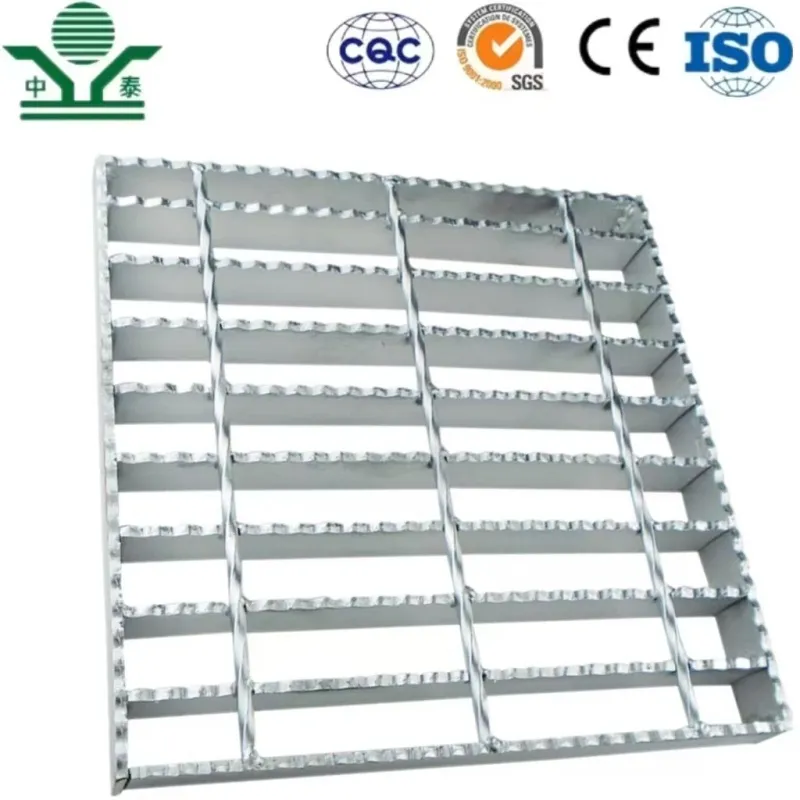
If you work around industrial platforms, wastewater plants, or power stations, you know grating is one of those unsung heroes. I recently revisited Zhongtai Heavy Duty Building Grating Low Carbon Steel Grating at their Anping facility. To be honest, the blend of sturdy fabrication and practical customization stood out, even after years of walking shop floors.
What’s trending in industrial grating
The market is pivoting to thicker bearing bars, serrated profiles for slip resistance, and hot-dip galvanizing that actually lasts. Sustainability is creeping in too—longer life cycles beat frequent replacements. Many customers say they want faster installs and safer walking surfaces; serrated or I-section bars answer that without costing a fortune.
Technical snapshot
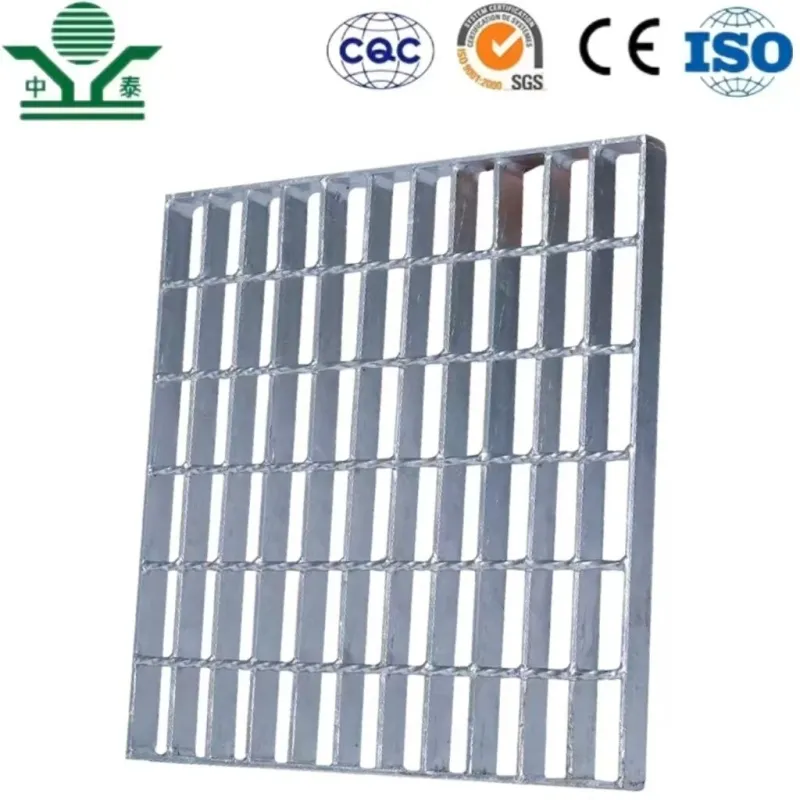
The Zhongtai Heavy Duty Building Grating Low Carbon Steel Grating uses carbon steel (Q235/S235JR) or stainless (304/316). Fabrication is typically forge-welded (electrofusion) or pressure-locked, then finished with hot-dip galvanizing to ASTM/ISO norms—or painted/untreated if you insist. Origin: No. 12, Jingwu Road, East District, Industrial Park, Anping County, Hengshui, Hebei, China.
| Parameter | Spec / Options |
|---|---|
| Materials | Carbon steel (Q235/S235JR), Stainless 304/316 |
| Bearing bar pitch | 15, 22, 25, 30, 32.5, 34, 40, 50, 60, 80, 90 mm |
| Cross bar center pitch | 24–200 mm |
| Bar thickness × width | 3–16 mm × 10–150 mm |
| Profiles | Plain, Serrated, I-Section |
| Surface finish | Hot-dip galvanized, Painted, Untreated |
| Panel options | Standard or fully customized (cut-outs, toe plates, checker nosing) |
Process flow and quality checks
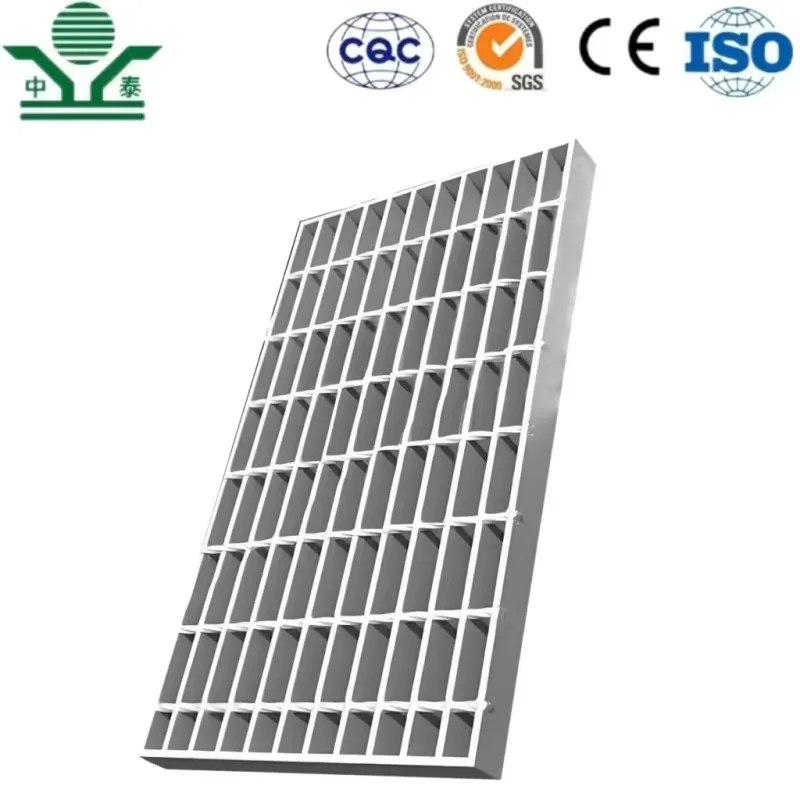
Materials: certified coils/plates (heat-number traceability). Methods: shear → forge-weld/pressure-lock → trimming → end banding → finishing (galv/paint) → final dimensional check.
Testing: load/deflection per NAAMM MBG/BS 4592, coating thickness per ASTM A123/ISO 1461, slip resistance checks on serrated bars (real-world R12–R13 equivalent, site dependent), salt-spray where specified. Internal example data (lab): 30×5 mm bars, 30/100 mm pitch, 1.0 m span → UDL ≈ 7.5 kN/m² with deflection ≈ 8.6 mm; point load 3 kN at center → ≈ 6.1 mm. Your mileage will vary with spans and profiles.
Service life: hot-dip galvanized in urban/industrial atmospheres typically ≈ 20–35 years; coastal settings may require stainless or heavier zinc. Certifications: ISO 9001, CE on request.
Where it’s used (and why)
Petrochem walkways, power plant platforms, wastewater treatment decks, mining screens, shipyards, food plants (stainless), and architectural sunshades. Serrated tops help when oil or algae is in the mix—seems obvious, but surprisingly still overlooked in some specs.
Vendor comparison (quick take)
| Vendor | Coating standard | QC & Traceability | Lead time | Customization |
|---|---|---|---|---|
| Zhongtai | ASTM A123 / ISO 1461 (reportable) | Heat-number traceability; dimensional sheets | ≈ 10–25 days (scope dependent) | Cut-outs, odd radii, serrated/I-bars |
| Local Fabricator A | Galv “shop standard” (varies) | Basic COAs, limited lot tracking | around 2–6 weeks | Some custom; limited I-sections |
| Regional Mill B | ISO 1461, EN options | Full QC; pricier | 3–8 weeks | High; engineered submittals |
Data ≈ typical; real-world outcomes vary by project, coatings queue, region.
Customization and case note
The Zhongtai Heavy Duty Building Grating Low Carbon Steel Grating is fully customizable—think pump cut-outs, pipe penetrations, kick plates, checker nosings, and bolted clips. One recent refinery upgrade (North Asia) swapped legacy 25×3 plain bars for 30×5 serrated, span 900 mm. Result: slip incidents dropped to zero over six months, and maintenance crews noted less vibration under trolley loads. Not scientific, but telling.
Why pick it
- Heavy-duty capacity with sensible weight.
- Serrated/I-bars for traction without fussy coatings.
- Galvanizing to recognized standards; paint if needed.
- Customers like the “arrives true-to-size” factor—less site cutting.
Final thought: you can overthink grating. Or you can spec the right bars, the right pitch, and proper galvanizing—and move on. This is the latter.
Authoritative citations
- ASTM A123/A123M – Standard Specification for Zinc (Hot-Dip Galvanized) Coatings on Iron and Steel Products.
- ISO 1461 – Hot dip galvanized coatings on fabricated iron and steel articles.
- ANSI/NAAMM MBG 531 – Metal Bar Grating Manual.
- BS 4592-0 – Industrial type flooring and stair treads, Part 0: General Requirements.
- GB/T 700 – Carbon Structural Steels (Q235).
- YB/T 4001.1-2007 – Steel Grating (China Industry Standard).
-
Ultimate Guide to Choosing the Right Sound Proof Barrier
NewsApr.16,2026
-
Effective Guide to Installing a Sound Deadening Fence for Peace
NewsApr.09,2026
-
Comprehensive Guide to Portable Sound Barrier Solutions for Noise Control
NewsApr.07,2026
-
Effective Outdoor Acoustic Barriers for Noise Reduction and Enhanced Wellbeing
NewsApr.04,2026
-
Effective Noise Cancelling Fence Solutions for Peaceful Living
NewsMar.31,2026
-
Enhancing Workplace Productivity with Effective Cubicle Sound Barriers
NewsMar.28,2026
Subscribe now!
Stay up to date with the latest on Fry Steeland industry news.