

Introduction to Perforated Metal Mesh Sheets in B2B Applications
In diverse industrial and commercial sectors, the demand for versatile and robust material solutions is paramount. Among these, perforated metal mesh sheet stands out as an engineering marvel, offering a unique blend of strength, functionality, and aesthetic appeal. These sheets, characterized by their uniform patterns of holes, provide solutions for filtration, acoustics, ventilation, safety, and architectural design. This comprehensive overview delves into the intricate world of perforated metal, exploring its manufacturing, applications, technical merits, and the strategic considerations for B2B procurement, emphasizing the product Perforated Metal Sheet #8 Mesh China Manufacturing Perforated Mesh Plastic Sheet.
Engineers, procurement specialists, and project managers rely on precise specifications and proven performance when integrating perforated metal mesh sheet into their projects. From heavy-duty industrial screens to sophisticated architectural facades, the adaptable nature of perforated metals makes them indispensable across a spectrum of industries, including petrochemical, metallurgy, water treatment, and HVAC systems.
Industry Trends and Market Dynamics for Perforated Metal Solutions
The global market for perforated metal products is experiencing robust growth, driven by increasing industrialization, infrastructure development, and a rising emphasis on sustainable and aesthetically pleasing architectural designs. Key trends include the adoption of advanced manufacturing techniques such as laser cutting for intricate patterns, the use of high-performance alloys for enhanced durability and corrosion resistance, and a growing demand for customized solutions. The emphasis on energy efficiency in various applications, from HVAC systems to acoustic panels, further fuels the demand for precisely engineered perforated metal mesh sheet products.
Innovations in material science are also playing a significant role. For instance, the development of lightweight yet strong aluminum alloys and specialty stainless steels provides engineers with greater flexibility in design and application, particularly where weight reduction and environmental resilience are critical. The surge in smart city initiatives and green building certifications also drives the integration of perforated metal for shading, ventilation, and decorative elements that contribute to building performance and occupant comfort. The market is also seeing a rise in demand for perforated metal grating and perforated mesh sheet metal tailored for specific environmental conditions or specialized filtration needs.
Furthermore, the expansion of manufacturing capabilities in regions like China has led to increased accessibility and competitive pricing for high-quality metal perforated mesh products, making sophisticated solutions more attainable for a broader range of B2B clients worldwide. This global supply chain optimization encourages innovation and provides diverse options for customized perforated metal components.
Technical Specifications and Material Versatility
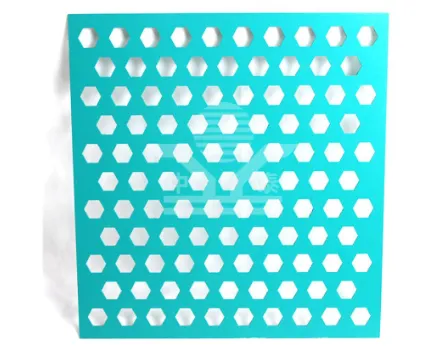
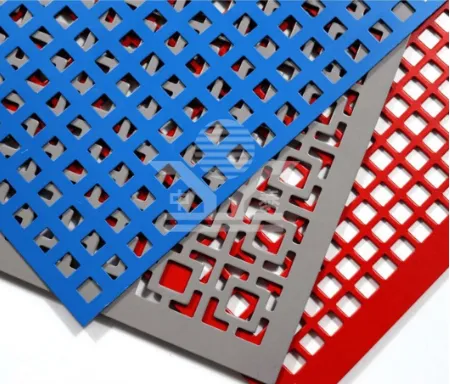
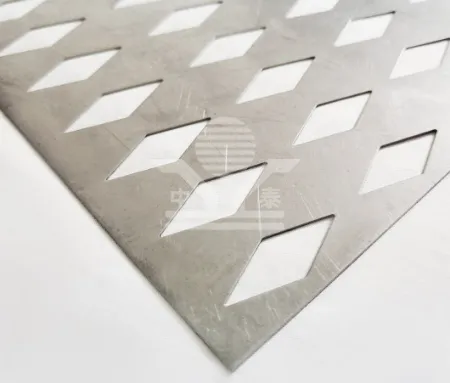
The performance of a perforated metal mesh sheet is fundamentally defined by its technical specifications. Critical parameters include hole size, hole pattern (round, square, slotted, hexagonal, decorative), pitch (distance between hole centers), open area percentage, sheet thickness (gauge), and material type. These specifications are meticulously chosen based on the intended application, dictating fluid dynamics, structural integrity, light transmission, and acoustic properties.
Key Parameters:
- Hole Size and Shape: Ranging from micro-perforations for fine filtration (e.g., 0.5mm diameter) to large apertures for heavy screening (e.g., 50mm diameter). Common shapes include round (most popular), square, oblong, and hexagonal.
- Pitch: The center-to-center distance between two adjacent holes, directly impacting the open area and structural stability.
- Open Area Percentage: The ratio of the total area of the holes to the total area of the sheet, expressed as a percentage. This is crucial for flow rate, light diffusion, and sound absorption. Typical ranges are 20% to 60%, but can vary widely.
- Sheet Thickness (Gauge): Determines the material's strength, rigidity, and weight. Available from thin foils to heavy plates.
- Margin: The unperforated area along the edges of the sheet, providing structural support and facilitating mounting.
Common Materials for Perforated Metal Sheets:
- Stainless Steel (e.g., 304, 316, 316L): Excellent corrosion resistance, high strength, suitable for harsh environments (chemical, food processing, marine).
- Carbon Steel: Economical, high strength, can be galvanized or powder-coated for corrosion resistance. Ideal for structural and general industrial applications.
- Aluminum: Lightweight, excellent corrosion resistance (especially for outdoor applications), good thermal and electrical conductivity, easily formable.
- Galvanized Steel: Zinc coating provides superior corrosion protection compared to plain carbon steel, often used in outdoor or moderately corrosive environments.
- Copper/Brass: Aesthetic appeal, antimicrobial properties, good electrical conductivity. Used in decorative and specialized applications.
- Special Alloys: Including Hastelloy, Inconel for extreme temperatures, corrosive media, or specific mechanical requirements.
Product Specification Table: Perforated Metal Sheet #8 Mesh
| Parameter | Typical Specification | Description/Application |
|---|---|---|
| Product Name | Perforated Metal Sheet #8 Mesh China Manufacturing Perforated Mesh Plastic Sheet | Specific product example, highlighting manufacturing origin and mesh count. |
| Material Options | Stainless Steel (304, 316, 316L), Carbon Steel, Aluminum, Galvanized Steel, Copper, Titanium. | Selected based on corrosion resistance, strength, and environmental factors. |
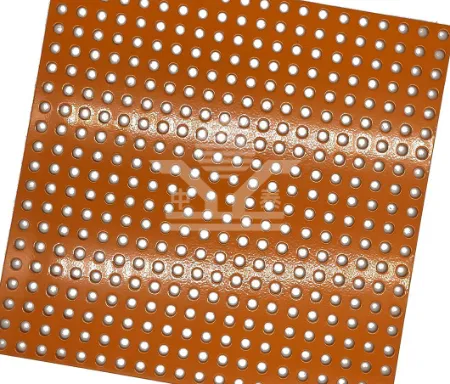
| Hole Pattern | Round (staggered 60°), Square, Slotted, Hexagonal, Decorative. | Influences open area, aesthetics, and structural integrity. Round is most common. |
| Hole Diameter | 0.5 mm to 100 mm (or larger on custom order). #8 Mesh typically refers to a specific aperture size relative to wire diameter in woven mesh, but in perforated, it can denote a small, specific hole size or count per inch. | Determines filtration capability, light transmission, and ventilation. |
| Sheet Thickness | 0.5 mm to 10 mm (or greater for heavy-duty applications). | Impacts strength, rigidity, and weight. |
| Open Area | 20% to 60% (customizable). | Critical for flow rates (air, liquid), sound absorption, and light passage. |
| Standard Sheet Sizes | 1000mm x 2000mm, 1250mm x 2500mm, 1500mm x 3000mm, 4ft x 8ft, 4ft x 10ft. Custom sizes available. | Optimized for standard manufacturing and transport, but often custom-fabricated. |
| Surface Treatment | Polishing, galvanizing, powder coating, anodizing, painting. | Enhances corrosion resistance, aesthetics, and durability. |
The Advanced Manufacturing Process of Perforated Metal Mesh Sheet
The production of a high-quality perforated metal mesh sheet involves a precise and carefully monitored manufacturing process, ensuring consistency, accuracy, and durability. While specific steps may vary depending on the material and desired complexity, the core principles remain consistent. Modern facilities leverage advanced machinery and rigorous quality control protocols to meet demanding industrial specifications.
Schematic Process Flow:
1. Material Selection & Preparation
High-grade raw material (coils or sheets) selected based on application. Includes metals like stainless steel, aluminum, carbon steel. Surface cleaning and initial inspection.
2. Perforating (Punching/Stamping)
Using high-speed stamping presses with custom tooling for precise hole patterns. CNC machining is employed for complex designs or laser cut perforated metal panels to ensure accuracy and minimal material distortion.
3. Leveling & Deburring
Sheets are flattened to remove stresses and distortions caused by perforation. Deburring removes sharp edges, ensuring safety and optimal finish.
4. Shearing & Fabrication
Sheets are cut to precise dimensions. Further fabrication like bending, welding, or forming into complex shapes occurs based on customer requirements.
5. Surface Treatment
Application of protective or decorative coatings such as galvanizing, powder coating, anodizing, or polishing to enhance durability and aesthetics.
6. Quality Control & Packaging
Thorough inspection against ISO 9001 standards, dimensional checks, open area verification, and material integrity tests. Secure packaging for transport.
Testing Standards and Service Life: Adherence to international standards such as ISO 9001 for quality management, ASTM (American Society for Testing and Materials) for material properties, and ANSI (American National Standards Institute) for product specifications is critical. These standards ensure that products like metal sheet with small holes or holed metal sheet meet rigorous performance criteria. The service life of perforated metal sheets is largely dependent on the material, application environment, and surface treatment. For example, 316L stainless steel in a marine environment can offer decades of service life due to its superior corrosion resistance, while galvanized carbon steel might provide 10-20 years in less aggressive outdoor settings.
This meticulous process, from initial raw material selection to final inspection, ensures that each perforated metal mesh sheet delivers consistent performance and meets the stringent requirements of B2B clients across petrochemical, metallurgy, and water supply & drainage sectors.
Technical Advantages and Performance Benefits
The inherent design and material properties of perforated metal mesh sheet confer numerous technical advantages, making it a preferred choice across diverse industrial applications. These benefits translate into operational efficiencies, cost savings, and enhanced safety.
- Superior Strength-to-Weight Ratio: By removing material strategically, perforated sheets maintain significant structural integrity while drastically reducing weight compared to solid sheets. This is crucial for applications where weight is a factor, such as transportation, aerospace components, and large architectural installations.
- Excellent Ventilation and Heat Dissipation: The open area allows for free passage of air, facilitating efficient heat exchange. This makes them ideal for enclosures for electronics, machinery guards, and HVAC grilles, contributing to equipment longevity and energy saving.
- Effective Filtration and Separation: Precise hole patterns ensure accurate particle separation in filtration systems for liquids, gases, and solids. This is vital in petrochemical refining, water treatment, and food processing for maintaining product purity and process efficiency.
- Noise Attenuation and Acoustic Performance: When backed by sound-absorbing materials, perforated metal acts as an excellent acoustic panel, diffusing and absorbing sound waves. This is invaluable in reducing noise pollution in industrial environments, recording studios, and public spaces, enhancing workplace safety and comfort.
- Corrosion Resistance (Material Dependent): Using materials like stainless steel or aluminum, or applying surface treatments such as galvanizing and powder coating, provides exceptional resistance to corrosion, extending product life in aggressive chemical or outdoor environments. This minimizes maintenance costs and ensures long-term operational reliability.
- Aesthetic Versatility: The ability to create diverse hole patterns and finishes offers significant design flexibility, allowing for visually appealing architectural facades, balustrades, and interior design elements. This blends functionality with modern design principles.
- Enhanced Safety and Security: Used in guarding applications, barriers, and stair treads, the material provides robust protection while maintaining visibility and air circulation. The anti-slip properties of certain perforated patterns also contribute to workplace safety.
These combined advantages underscore why perforated metal solutions, particularly a well-engineered perforated mesh sheet, are a cornerstone in demanding B2B applications where performance, durability, and cost-effectiveness are paramount.
Diverse Application Scenarios and Target Industries
The adaptability of perforated metal mesh sheet allows its deployment across an extensive range of industries, addressing specific functional and aesthetic requirements. Its versatility makes it a go-to solution for engineers and designers.
Key Target Industries and Applications:
- Petrochemical and Chemical Processing: Used for catalyst support grids, reactor internal components, filtration screens, strainers, and safety enclosures. The corrosion resistance of stainless steel variants is critical here.
- Metallurgy and Mining: Vibrating screens, sorting equipment, conveyor guards, and material classification systems. Durability against abrasion and heavy loads is essential, often requiring thicker perforated metal grating.
- Water Supply & Drainage Systems: Water intake screens, filtration elements for municipal and industrial wastewater treatment, trench drains, and sediment control systems. Materials like 316L stainless steel are favored for their resistance to aquatic corrosion.
- HVAC and Environmental Control: Air diffusers, grilles, dust filters, acoustic panels for air conditioning units, and protective covers for ventilation systems. Promotes efficient airflow and reduces noise.
- Architecture and Construction: Facades, sunscreens, balustrades, ceilings, wall cladding, and decorative panels. Offers aesthetic appeal, solar shading, and natural ventilation, often featuring intricate laser cut perforated metal panels.
- Food and Beverage Processing: Drying trays, strainers, sieves, and conveyor belts. Requires food-grade materials like 304 or 316 stainless steel, meeting stringent hygiene standards.
- Automotive and Transportation: Grilles, exhaust components, engine compartment covers, and interior trim. Lightweight aluminum or galvanized steel perforated sheets contribute to fuel efficiency and corrosion protection.
- Agricultural Sector: Grain dryers, sorting screens for seeds and produce, protective enclosures for machinery.
- Electronics and Telecommunications: EMI/RFI shielding, speaker grilles, and protective covers for server racks.
This broad spectrum of applications highlights the material's adaptability and critical role in modern industrial and commercial infrastructure. The specific selection of hole pattern, material, and finish is always tailored to meet the unique demands of each application, emphasizing the importance of expert consultation.
Customized Solutions: Tailoring Perforated Metal to Exacting Needs
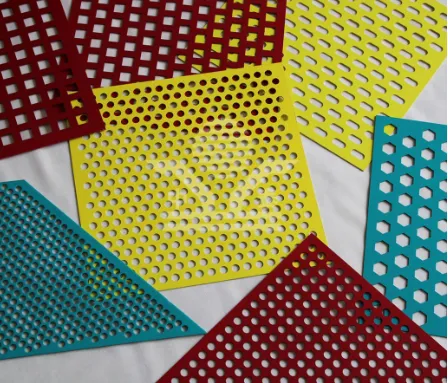
One of the most significant advantages for B2B clients is the ability to procure highly customized perforated mesh sheet metal. Standard stock sizes and patterns serve many purposes, but complex industrial applications or bespoke architectural projects often demand precise tailoring. Reputable manufacturers offer extensive customization options, ensuring that the final product perfectly aligns with specific functional, structural, and aesthetic requirements.
Key Areas of Customization:
- Material Selection: Beyond standard options, custom orders can specify exotic alloys (e.g., Titanium, Monel) for extreme conditions, or precise grades of common metals.
- Unique Hole Patterns and Sizes: While round holes are common, custom tooling can produce unique slot configurations, embossed patterns, or variable hole sizes within a single sheet to optimize airflow, light diffusion, or structural performance. Laser cut perforated metal panels offer unparalleled precision for intricate designs.
- Custom Dimensions and Margins: Sheets can be fabricated to exact lengths and widths, minimizing waste and additional fabrication steps at the client's end. Specific unperforated margins can be specified for mounting or structural reinforcement.
- Advanced Fabrication and Forming: Custom solutions often involve bending, rolling, welding, or stamping the perforated sheet into three-dimensional components, such as cylinders, cones, or complex housings.
- Specialized Surface Treatments: Tailored coatings, such as anti-microbial finishes for medical applications, high-durability coatings for abrasive environments, or specific color matching for architectural integration, are available.
Working with a manufacturer capable of advanced engineering and fabrication ensures that even the most challenging designs for metal sheet with holes can be brought to fruition, providing optimal performance and seamless integration into larger systems. This level of customization distinguishes professional suppliers in the B2B landscape.
Vendor Comparison and Selection Criteria
Choosing the right supplier for perforated metal mesh sheet is a critical decision that impacts project timelines, product quality, and overall cost-effectiveness. B2B purchasers must evaluate potential vendors based on a comprehensive set of criteria beyond just pricing.
Key Vendor Evaluation Factors:
- Manufacturing Capability & Technology: Assess the vendor's machinery (CNC, laser cutting), capacity for large orders, and ability to handle complex custom designs.
- Quality Control & Certifications: Verify adherence to international standards (ISO 9001, ASTM). Request material test certificates and quality assurance reports.
- Material Expertise: A knowledgeable vendor can advise on the best material and finish for specific environmental and operational demands.
- Customization & Fabrication Services: Look for partners who offer comprehensive fabrication, including bending, welding, forming, and specialized surface treatments.
- Lead Time & Logistics: Evaluate their ability to meet production schedules and deliver efficiently, especially for urgent or large-volume orders. Inquire about typical lead times for standard vs. custom products.
- Customer Support & After-Sales Service: Responsiveness, technical assistance, and a clear warranty policy are indicators of a reliable partner.
- Pricing & Value: While not the sole factor, competitive pricing coupled with high quality offers the best value proposition.
- Industry Experience & Reputation: Longevity in the market, testimonials, and a portfolio of successful projects in relevant industries.
Product Comparison: Standard vs. Premium Perforated Metal Sheets
| Feature | Standard Perforated Metal | Premium Perforated Metal (e.g., Laser Cut) |
|---|---|---|
| Manufacturing Method | Punching/Stamping | Laser Cutting, CNC Punching (high precision) |
| Hole Precision & Consistency | Good, slight tooling wear over time | Excellent, virtually perfect alignment and size |
| Minimum Hole Size | Limited by sheet thickness and tooling strength (typically hole diameter ≥ sheet thickness) | Much smaller, independent of sheet thickness (e.g., 0.2mm on 2mm sheet) |
| Pattern Complexity | Standard geometric patterns | Highly intricate, non-standard, and decorative designs possible |
| Burr Formation | Present, requires deburring (mechanical) | Minimal to none, cleaner edge finish |
| Cost Efficiency | Lower initial cost, high volume production | Higher initial cost, justified by precision and complexity |
| Lead Time | Shorter for standard patterns, longer for custom tooling | Generally faster for custom patterns as tooling is not required, but machine time can be longer |
By carefully considering these factors, B2B buyers can forge strong, reliable partnerships that deliver consistent quality and value for their perforated metal needs.
Real-World Case Studies and Expertise in Action
The practical application of metal perforated mesh showcases its transformative power across various industries. Here are illustrative examples demonstrating its impact and the expertise involved in its deployment.
Case Study 1: Noise Reduction in Industrial Manufacturing Facility
A large automotive stamping plant faced challenges with excessive noise levels exceeding occupational safety standards (OSHA limits). The solution involved installing custom-fabricated acoustic panels using 2mm thick galvanized carbon steel perforated mesh sheet with 5mm round holes and 40% open area. These panels were strategically placed around high-noise machinery, backed by a layer of mineral wool insulation. Post-installation measurements showed an average reduction of 12 dB(A) in targeted areas, bringing noise levels well within acceptable limits. This significantly improved worker comfort and compliance, demonstrating the material's efficacy in industrial acoustic management.
Case Study 2: Optimized Filtration in a Water Treatment Plant
A municipal wastewater treatment facility required robust and highly efficient screens for primary effluent filtration. Traditional woven mesh screens experienced frequent clogging and required extensive maintenance. Our solution involved supplying 316L stainless steel metal sheet with small holes, precisely 1.5mm diameter in a staggered pattern, fabricated into large cylindrical filter elements. The smooth surface of the perforated metal and the optimized open area significantly reduced fouling and improved backwash efficiency. This resulted in a 30% reduction in maintenance cycles and a 15% increase in throughput capacity, showcasing improved operational efficiency and longevity.
Case Study 3: Architectural Facade for Energy Efficiency
A commercial office building in a high-sunlight region sought an aesthetically pleasing and energy-efficient solution for its external façade. Custom-designed aluminum perforated mesh sheet panels were supplied, featuring a unique decorative pattern and anodized finish. These panels served as a dynamic sun-shading system, reducing solar heat gain by an estimated 25% during peak hours, thereby lowering cooling costs. Concurrently, the panels allowed for natural light diffusion, enhancing interior comfort without compromising external views, illustrating the dual benefits of design and performance.
Ensuring Trustworthiness: Quality, Support, and Commitment
In the B2B landscape, trust is built on reliability, transparency, and consistent performance. A reputable supplier of perforated metal mesh sheet products demonstrates this through robust quality assurance, clear fulfillment processes, and dedicated customer support.
Quality Assurance and Certifications:
Adherence to rigorous quality management systems like ISO 9001:2015 is non-negotiable. This certification ensures that all stages, from material sourcing to final inspection, meet international standards for quality and consistency. Material Test Certificates (MTCs) are provided for every batch, confirming compliance with specified chemical composition and mechanical properties. Further certifications, such as ASTM or relevant national standards, validate product performance for specific applications. Many manufacturers also implement advanced internal QC procedures, including digital imaging for hole pattern verification and spectrographic analysis for material authenticity.
Lead Time and Fulfillment Details:
Typical lead times for standard perforated sheets can range from 1-3 weeks, depending on material availability and production queue. For highly customized orders, including specific patterns or exotic materials, lead times may extend to 4-8 weeks, factoring in tooling design and specialized fabrication processes. Transparent communication on production schedules and logistics, including shipping options (FOB, CIF) and tracking, is a hallmark of reliable fulfillment. Our operational efficiency in China allows for competitive lead times and global distribution, effectively meeting demanding project deadlines.
Warranty and After-Sales Support:
A standard product warranty typically covers manufacturing defects for 1-5 years, depending on the material and application. Comprehensive after-sales support includes technical consultation for installation, maintenance guidance, and prompt resolution of any product-related issues. Our commitment extends beyond delivery, providing continuous support to ensure the long-term satisfaction and successful integration of our perforated metal products.
Frequently Asked Questions (FAQ)
- Q1: What is the maximum sheet size you can perforate?
- A1: Our capabilities typically handle sheets up to 1.5 meters wide and 6 meters long for standard punching. For laser cutting, larger sizes can often be accommodated or fabricated through precision welding of smaller sections.
- Q2: How do I determine the correct open area percentage for my application?
- A2: The optimal open area depends on the specific function. For filtration, it relates to particle size; for ventilation, it's about airflow rate; for acoustics, it's about sound absorption. Our engineering team can assist in calculating the ideal open area based on your performance requirements.
- Q3: Can perforated metal sheets be formed or bent after perforation?
- A3: Yes, perforated metal can be formed and bent. However, the integrity of the perforations and the material's properties must be considered during design to avoid distortion. We offer a range of fabrication services including bending, rolling, and welding.
- Q4: What is the difference between an offset (staggered) and straight hole pattern?
- A4: An offset (or staggered) pattern, typically 60-degree, places holes in a triangular arrangement, maximizing open area for a given hole size and offering better aesthetic appeal and structural integrity. A straight pattern aligns holes in rows and columns, which can be easier to clean but generally provides a lower open area for the same pitch.
- Q5: Is it possible to get a sample before placing a large order?
- A5: Yes, we understand the importance of material and pattern verification. Samples of standard materials and patterns are typically available, and for custom designs, small prototypes can be produced for approval before full production commences.
Conclusion
The versatility, durability, and functional benefits of perforated metal mesh sheet make it an indispensable material in modern industrial and architectural applications. From providing critical filtration in petrochemical plants to enhancing acoustic comfort in commercial spaces, its engineered design offers unparalleled performance. By focusing on precision manufacturing, rigorous quality control, and comprehensive customization capabilities, leading suppliers ensure that B2B clients receive optimal solutions tailored to their exact requirements.
Understanding the technical specifications, manufacturing processes, and diverse application potential is key to harnessing the full value of perforated metal. Partnering with an expert manufacturer guarantees not only a superior product but also reliable support throughout the project lifecycle.
References
- ASTM International. (n.d.). ASTM Standards for Perforated Metal. Retrieved from www.astm.org
- International Organization for Standardization. (n.d.). ISO 9001:2015 Quality management systems. Retrieved from www.iso.org
- Industrial Perforators Association. (n.d.). Design and Fabrication Guides for Perforated Metal. Retrieved from www.iperf.org
- Metal Architecture Magazine. (n.d.). The Evolving Role of Perforated Metals in Modern Design. Retrieved from www.metalarchitecture.com
- National Institute of Standards and Technology (NIST). (n.d.). Materials Science and Engineering Research. Retrieved from www.nist.gov
-
Ultimate Guide to Choosing the Right Sound Proof Barrier
NewsApr.16,2026
-
Effective Guide to Installing a Sound Deadening Fence for Peace
NewsApr.09,2026
-
Comprehensive Guide to Portable Sound Barrier Solutions for Noise Control
NewsApr.07,2026
-
Effective Outdoor Acoustic Barriers for Noise Reduction and Enhanced Wellbeing
NewsApr.04,2026
-
Effective Noise Cancelling Fence Solutions for Peaceful Living
NewsMar.31,2026
-
Enhancing Workplace Productivity with Effective Cubicle Sound Barriers
NewsMar.28,2026
Subscribe now!
Stay up to date with the latest on Fry Steeland industry news.