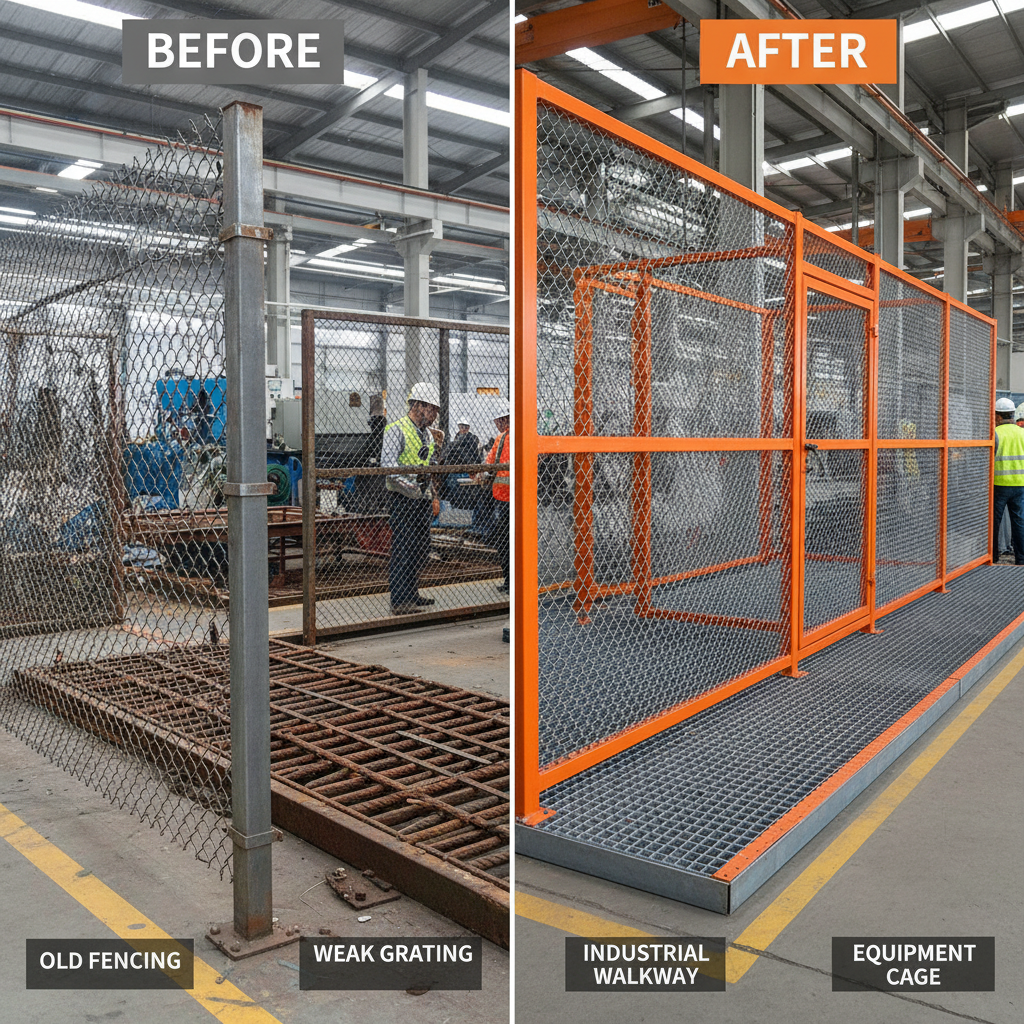
In the modern industrial landscape, the demand for high-strength, corrosion-resistant flooring and walkway solutions has led to the widespread adoption of specialized metal grating. Whether it is for heavy-duty industrial platforms or architectural accents, the structural integrity of these components ensures safety and longevity in the most demanding environments.
While various materials are available, the search for a balance between lightweight properties and extreme durability often leads engineers to consider advanced mesh designs. The ability to customize pitch, load-bearing capacity, and surface treatment allows these products to meet strict international safety and engineering standards.
For those seeking a versatile and resilient solution, the aluminium diamond mesh sheet offers a compelling alternative to traditional steel, providing an exceptional strength-to-weight ratio and inherent resistance to oxidation.
Industrial Significance of Aluminium Diamond Mesh Sheet
The adoption of an aluminium diamond mesh sheet in industrial settings is driven by the need for materials that can withstand harsh chemical exposures without the constant need for repainting or heavy maintenance. In sectors like oil and gas, food processing, and marine engineering, the ability of aluminium to form a natural oxide layer provides a critical advantage over untreated carbon steel.
Beyond corrosion resistance, the geometric stability of the diamond mesh pattern ensures that loads are distributed evenly across the surface. This structural efficiency reduces the overall dead load on supporting beams and foundations, making it an ideal choice for retrofitting older facilities where weight constraints are a primary concern.
Technical Specifications and Material Composition
Understanding the technical makeup of these sheets is essential for ensuring safety. While the core of many industrial gratings is carbon steel, the transition to aluminium alloys allows for a significant reduction in weight while maintaining high tensile strength. This is particularly important for walkways and foot pedals where rapid installation and ease of transport are required.
The specifications vary based on the intended load; for instance, bearing bar pitches of 30mm are widely regarded as the gold standard for industrial fields due to their superior resistance to surface lash. In contrast, a 40mm pitch is often the most economical choice for small-span applications, providing a lightweight yet stable surface for pedestrian traffic.
Furthermore, surface treatments play a pivotal role in longevity. Options range from untreated finishes to hot-dipped galvanizing, which adds a protective zinc layer to prevent rust. For the most extreme environments, serrated styles (S-style) are employed to increase friction, ensuring that the mesh remains anti-slip even when covered in oil or water.
Manufacturing Excellence and Precision Welding
The production of a high-quality aluminium diamond mesh sheet requires state-of-the-art machinery to ensure consistency. Utilizing world-class equipment, such as Italian ORSOGRIL systems, allows manufacturers to arrange bearing and cross bars in precise longitude and latitude orders.
Precision is maintained through computer-controlled high-tension resistance welding. This process ensures that every junction is firm, resulting in a smooth surface that minimizes trip hazards while maximizing the structural load capacity of the aluminium diamond mesh sheet.
Quality control extends to the final dimensions, where custom cutouts and taps are meticulously calculated. Whether the product is processed according to a customer's specific drawing or standard industrial sizes, the focus remains on achieving a flawless finish that eliminates sharp edges and internal stresses.
Performance Metrics Across Different Pitch Types
Selecting the correct pitch is the most critical decision when implementing a grating solution. A 30mm pitch offers the strongest resistance to surface impact, making it the preferred choice for heavy machinery platforms. Meanwhile, the 60mm pitch, specifically developed for the mining industry, solves the common problem of mineral splash and debris accumulation on the plate.
For residential or light commercial walkway platforms, the 30mm bearing bar combined with a 76mm cross bar pitch is the most popular configuration globally. This balance ensures sufficient support for foot traffic while maintaining a visually appealing, open-grid structure that allows light and air to pass through.
Performance Rating of Mesh Configurations
Global Applications and Field Use Cases
Across the globe, these mesh solutions are deployed in diverse environments. In North American construction sites, they are frequently used as temporary construction fences and walkways to ensure worker safety. In Asia, particularly in mining hubs, the specialized 60mm pitch grating is essential for drainage covers and foot pedals in ore processing plants.
Furthermore, the architectural sector has embraced these materials for balcony guardrails and curtain wall decorations. The sleek aesthetic of the diamond pattern, combined with the lightweight nature of aluminium, allows architects to create open, breathable spaces without compromising on the security or structural integrity of the building.
Sustainability and Long-term Value Analysis
Investing in a high-quality aluminium diamond mesh sheet provides significant long-term economic benefits. Unlike cheaper alternatives that require frequent replacement due to rust, aluminium's natural durability drastically reduces the lifecycle cost of the installation. This makes it a sustainable choice for companies aiming to reduce their environmental footprint by minimizing material waste.
From a safety perspective, the long-term value is found in the reliability of the surface. Serrated bars ensure that the anti-slip properties do not degrade over time, protecting employees from workplace accidents. The peace of mind provided by a certified, high-strength grating system is an intangible but vital asset for any industrial operation.
Additionally, the recyclability of aluminium adds another layer of value. At the end of its service life, the material can be reclaimed and repurposed, aligning with the global transition toward a circular economy in the manufacturing sector.
Optimization Strategies for Industrial Installation
To maximize the effectiveness of the installation, precise weight calculations are mandatory. It is important to note that the weight of gratings varies after the end-welding and hot-galvanizing process. For example, normal industrial platforms using 30mm pitch bearing bars typically see a weight increase of 12%, while 60mm pitch versions may increase by up to 16%.
Proper anchoring is equally critical. Using high-grade steel belts for transport and secure fasteners during installation prevents shifting under heavy loads. When dealing with unusual sizes, it is a professional standard not to deduct cutouts from the total length and width to ensure that structural margins are maintained.
Finally, selecting the right bearing bar shape—whether plain (F-style), serrated (S-style), or I-section—should be based on the specific traffic and environmental conditions of the site. A combination of these optimization strategies ensures that the mesh performs at its peak capacity for decades.
Comparative Analysis of Mesh Configurations for Industrial Use
|
Pitch Specification
|
Primary Application
|
Load Capacity (1-10)
|
Cost Efficiency
|
| 30mm Bearing Pitch |
Heavy Industrial Platform |
9 |
Medium |
| 40mm Bearing Pitch |
Small Span Walkways |
7 |
High |
| 60mm Bearing Pitch |
Mining/Drainage Cover |
8 |
Medium |
| Serrated S-Style |
Oil & Gas Platforms |
10 |
Low |
| Plain F-Style |
General Pedestrian Use |
6 |
High |
| Custom I-Section |
Specialized Infrastructure |
9 |
Medium |
FAQS
For high-traffic industrial environments, a 30mm pitch between bearing bars is highly recommended. This configuration provides the strongest resistance to surface lash and impact, ensuring the walkway remains stable under heavy use. It is the most widely used type in the industrial field for a reason—it balances structural support with optimal safety.
Aluminium naturally forms a protective oxide layer that prevents deep corrosion. For more aggressive environments, hot-dipped galvanizing (G-treatment) can be applied. This double layer of protection makes it far superior to untreated carbon steel in coastal or chemical-heavy zones, significantly extending the product's lifespan.
Yes, serrated style (S-style) is significantly better for outdoor use, especially in areas prone to rain, snow, or oil spills. The serrations provide a high-friction surface that prevents slipping, whereas plain (F-style) grating can become slippery when wet. Safety standards usually mandate serrated grating for industrial outdoor platforms.
For custom orders, calculation is based on the actual area if provided by the customer, or the total outside size if based on a drawing (including cutouts and taps). It's important to remember that weight increases after galvanizing—typically by 12% for 30mm pitch and 16% for 60mm pitch.
Absolutely. Due to their aesthetic appeal and lightweight nature, aluminium diamond mesh sheets are frequently used for balcony guardrails, curtain wall decorations, and decorative fencing. They provide a modern, industrial look while maintaining high safety and security standards.
Using advanced Italian ORSOGRIL equipment and computer-controlled welding, high-capacity facilities can produce up to 10,000 square meters per day. This ensures that even large-scale infrastructure projects can be supplied within tight deadlines without sacrificing quality.
Conclusion
The integration of an aluminium diamond mesh sheet into industrial and architectural projects offers a strategic advantage in terms of weight reduction, corrosion resistance, and structural reliability. From the precise 30mm industrial pitch to the specialized mining configurations, these products solve critical engineering challenges while adhering to the highest global manufacturing standards.
As industries move toward more sustainable and low-maintenance materials, the role of high-grade aluminium grating will only grow. We recommend consulting with a technical expert to determine the ideal pitch and surface treatment for your specific load requirements to ensure maximum safety and longevity. Visit our website for more information: www.ztwiremesh.com