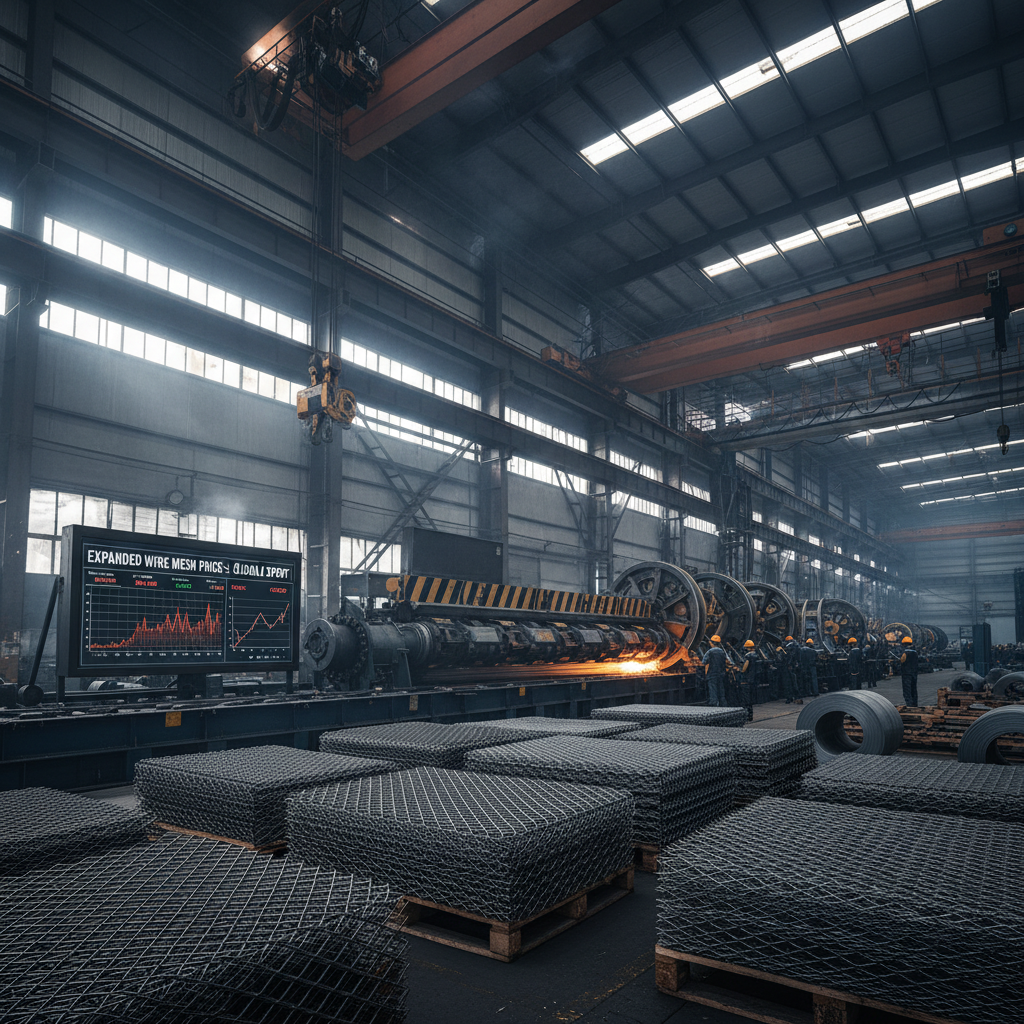
Galvanized expanded mesh has become a cornerstone of modern industrial filtration and security infrastructure due to its unique combination of structural integrity and corrosion resistance. By utilizing a process of slitting and stretching metal sheets, this material creates a rigid, open-diamond pattern that offers exceptional strength-to-weight ratios. Its widespread adoption across the globe reflects a growing demand for materials that can withstand harsh environmental conditions while maintaining optimal airflow and visibility.
In the context of global manufacturing, the shift toward sustainable and long-lasting materials has pushed galvanized expanded mesh to the forefront of architectural and security design. Whether used in heavy-duty industrial walkways or delicate ventilation screens, the zinc coating ensures that the base metal remains protected from oxidation. This longevity reduces the frequency of replacements, thereby lowering the total cost of ownership for facility managers and urban planners alike.
From a technical standpoint, the versatility of galvanized expanded mesh allows it to be tailored for specific needs, ranging from pest control in residential window screens to high-security barriers in correctional facilities. By balancing transparency with physical protection, it solves the critical challenge of securing a perimeter without compromising light transmission or ventilation.
Global Industry Context of Galvanized Expanded Mesh
The global demand for high-performance metallic meshes is driven by rapid urbanization and the expansion of industrial zones in emerging markets. According to international trade standards and ISO guidelines, the requirement for corrosion-resistant materials has surged as infrastructure projects move toward more aggressive environments, such as coastal regions and chemical processing plants. Galvanized expanded mesh serves as a primary solution to the problem of premature material failure caused by moisture and salt spray.
Furthermore, the integration of these materials into smart city designs emphasizes the need for "breathable" security. By utilizing the open-grid structure of the mesh, engineers can maintain safety protocols while ensuring that urban heat islands are mitigated through better airflow. This makes the material not just a security choice, but an environmental one.
Defining Galvanized Expanded Mesh and Its Purpose
Galvanized expanded mesh is a specialized metal product created by shearing a solid sheet of steel and stretching it to create a series of interconnected diamond-shaped openings. Unlike woven wire, there are no welds or joints, meaning the mesh is a single, continuous piece of metal. This monolithic structure eliminates the risk of "unraveling" and provides superior rigidity.
The "galvanized" aspect refers to the application of a protective zinc coating, which acts as a sacrificial anode to protect the underlying steel from rust. This process is essential for humanitarian and industrial needs where materials must be deployed in remote areas with minimal maintenance capabilities, ensuring that the structure remains intact for decades.
Ultimately, its purpose is to provide a versatile barrier that manages the flow of air, light, and physical access. Whether it is protecting a high-security window in a laboratory or acting as a deterrent in a prison, the mesh provides a high-strength shield that does not block the necessary visibility for surveillance or ventilation.
Key Performance Factors of Galvanized Expanded Mesh
One of the most critical factors is the structural durability of the galvanized expanded mesh. Because the material is stretched rather than welded, the stress is distributed evenly across the diamond bonds, preventing the localized failures often seen in welded grids. This makes it ideal for heavy-load applications like industrial flooring or security partitions.
Cost efficiency is another driving force. The manufacturing process of galvanized expanded mesh requires less raw material than traditional perforated sheets because no metal "slugs" are removed during production. This leads to a more sustainable production cycle and a lower price point for the end-user without sacrificing the strength of the final product.
Scalability and customization also define its utility. The mesh can be produced in various strand widths and opening sizes, allowing it to transition from a fine screen that blocks small insects to a heavy-duty grate that supports human weight. This flexibility ensures that it meets the diverse needs of both commercial and industrial building standards globally.
Real-World Global Applications
In the realm of high-security architecture, such as prisons and government laboratories, galvanized expanded mesh is used as a protective layer for windows and ventilation equipment. Its ability to block intruders while allowing guards to maintain a clear line of sight is irreplaceable. In these contexts, the mesh is often integrated into heavy-duty frames to create a nearly impenetrable barrier.
Beyond security, the material is widely utilized in industrial zones for catwalks, machine guards, and filtration systems. In post-disaster relief operations, rapid-deployment barriers made from this mesh are often used to secure perimeter zones or create temporary ventilation structures, providing a quick yet durable solution for humanitarian aid organizations.
Performance Comparison of Mesh Types
Long-Term Value and Sustainability
The long-term value of installing galvanized expanded mesh lies in its extreme reliability. By preventing the infiltration of pests and debris while allowing natural light to penetrate, it reduces the reliance on artificial lighting and chemical pest control in commercial buildings. This creates a healthier indoor environment and lowers operational energy costs over the lifecycle of the building.
From a sustainability perspective, the material is 100% recyclable. At the end of its service life, the steel and zinc can be reclaimed and reused in new manufacturing cycles. This aligns with the global push toward a circular economy, where the environmental footprint of industrial construction is minimized through the use of durable, recyclable metallic components.
Future Innovations in Mesh Technology
As we move toward the era of Industry 4.0, the production of galvanized expanded mesh is being transformed by automation and precision engineering. Laser-guided slitting processes are allowing for tighter tolerances and more complex patterns, enabling the mesh to be used in acoustic dampening and architectural facades that were previously impossible.
Integration with smart coatings is another emerging trend. New hybrid coatings are being developed that combine the traditional zinc galvanization with antimicrobial or hydrophobic layers. This is particularly valuable for laboratories and hospitals, where the mesh must not only provide security but also prevent the growth of pathogens on its surface.
Furthermore, the adoption of "Green Steel" (produced using hydrogen instead of coal) is set to make the production of this mesh carbon-neutral. This evolution ensures that the security and ventilation needs of tomorrow are met without compromising the health of the planet, blending industrial strength with ecological responsibility.
Challenges and Expert Solutions
One common challenge associated with galvanized expanded mesh is the potential for "sharp edges" created during the stretching process. In residential or public-facing applications, this can pose a safety risk. Expert installers overcome this by employing precision flattening processes or adding protective PVC coatings to the edges of the mesh to ensure user safety without compromising strength.
Another limitation is the susceptibility to extreme chemical corrosion in highly acidic environments. While standard galvanization is excellent for moisture, it can fail under specific chemical attacks. The solution involves moving to hot-dip galvanization or utilizing stainless steel expanded mesh for those specific zones, ensuring the barrier remains intact regardless of the chemical exposure.
Finally, achieving a perfectly uniform appearance over very large spans can be difficult. To solve this, engineers utilize modular framing systems that lock the mesh in place, preventing sagging and ensuring that the geometric diamond pattern remains consistent across the entire installation, maintaining both the aesthetic and functional integrity of the structure.
Technical Analysis of Galvanized Expanded Mesh Specifications
| Application Type |
Recommended Gauge |
Corrosion Resistance |
Security Level |
| Residential Screen |
Light/Fine |
Medium |
Basic |
| Industrial Vent |
Medium |
High |
Moderate |
| Prison Barrier |
Heavy Duty |
Very High |
Maximum |
| Walkway Grating |
Extra Heavy |
High |
N/A (Structural) |
| Laboratory Guard |
Medium/Fine |
High |
High |
| Animal Enclosure |
Medium |
Medium |
Moderate |
FAQS
The primary difference lies in the manufacturing process. Expanded mesh is created by slitting and stretching a single sheet of metal, resulting in a continuous structure with no welds. Welded mesh is made by intersecting separate wires and welding them at each junction. Consequently, expanded mesh generally offers better structural rigidity and is more cost-effective due to less material waste.
Depending on the thickness of the zinc coating and the severity of the environment, it can last anywhere from 20 to 50 years. In standard atmospheric conditions, the galvanization provides a robust barrier against rust. However, in coastal areas with high salt concentrations, periodic inspections or the use of hot-dip galvanization are recommended to extend the lifespan.
Yes, it is widely used in correctional facilities. Because it can be produced in heavy gauges with small openings, it provides a formidable physical barrier that is extremely difficult to cut or breach. Its openness also allows for essential ventilation and clear lines of sight for security personnel, making it a standard choice for prison window and door guards.
Yes, it is highly sustainable. The production process minimizes waste as no metal is removed from the sheet. Additionally, the material is fully recyclable at the end of its life. By extending the lifespan of the infrastructure it protects, it reduces the overall consumption of raw materials over time.
For residential applications, we recommend choosing "flattened" expanded mesh, which is passed through a cold-rolling mill to remove the sharp angles. Alternatively, the mesh can be encased in a frame or coated with a PVC layer to ensure a smooth surface that is safe for human touch.
Absolutely. One of the biggest advantages of expanded mesh is its customization. By adjusting the slitting distance and the stretch ratio during production, we can create diamond openings that range from a few millimeters for pest control to several centimeters for industrial grating.
Conclusion
Galvanized expanded mesh represents a perfect synergy of industrial strength and functional versatility. From its ability to secure high-risk facilities and protect residential openings to its role in sustainable industrial design, it addresses the critical need for materials that are both durable and efficient. By eliminating the vulnerabilities of welded joints and utilizing a protective zinc layer, it provides a long-term solution for ventilation, security, and structural support across the globe.
As the industry evolves toward greener production and smarter materials, the importance of selecting a high-quality, precisely engineered mesh cannot be overstated. Investing in the right specifications today ensures a safer, more sustainable, and more cost-effective tomorrow. For professional-grade solutions tailored to your specific industrial or commercial needs, visit our website: www.ztwiremesh.com.