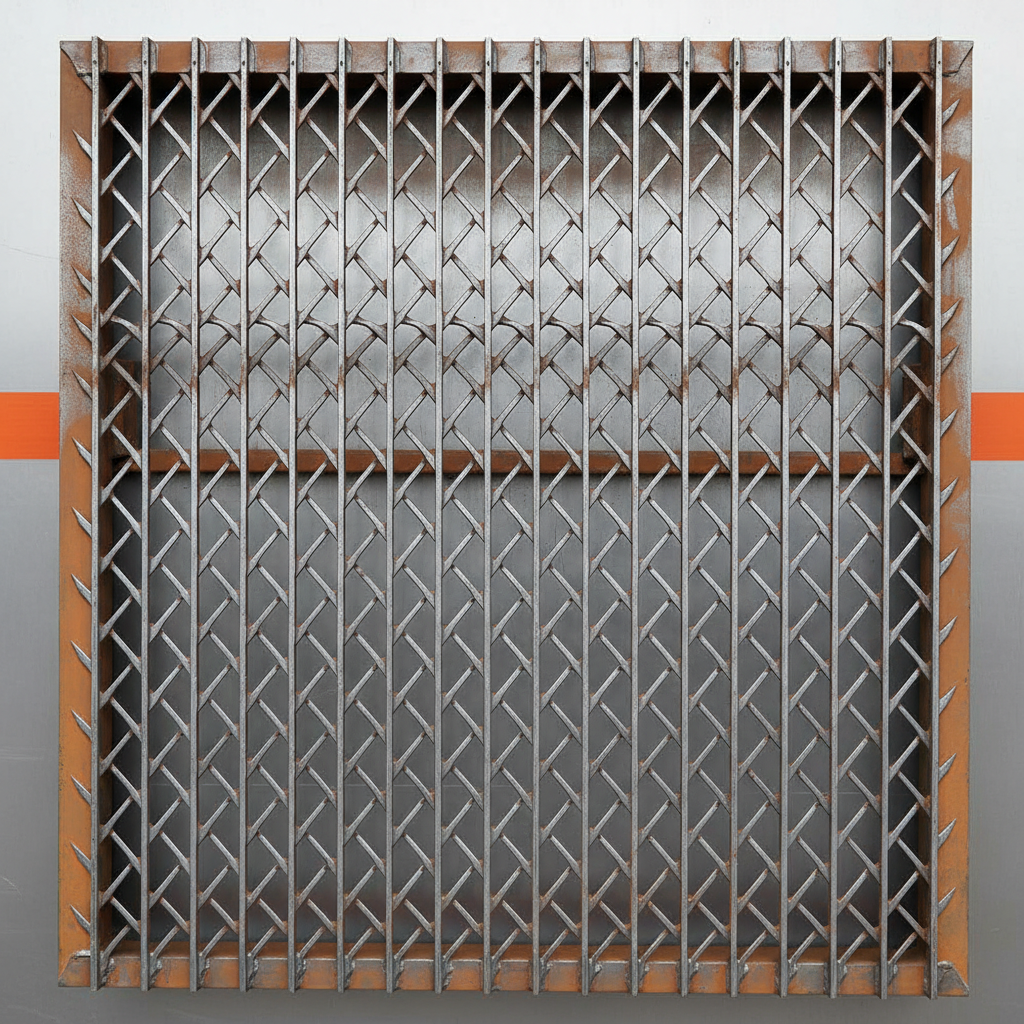
Selecting the right stainless perforated sheet suppliers is critical for industrial projects requiring precise filtration, ventilation, or architectural aesthetics. Perforated stainless steel involves punching or drilling a specific pattern of holes into a metal sheet, creating a versatile component used across the chemical, medical, and construction sectors. This guide examines the technical parameters and procurement strategies necessary to ensure material performance in demanding environments.
For procurement managers and engineers, the challenge lies in balancing the "open area" percentage with the structural integrity of the panel. Whether the application is a high-pressure filter in a fuel plant or a decorative facade for a government building, the choice of alloy and hole configuration directly impacts the lifespan and efficiency of the installation. Understanding these variables prevents costly failures and ensures compliance with international industrial standards.
In the following analysis, we will explore the critical technical dimensions of perforated metals, from material grade selection to the nuances of custom-cut sizing. By aligning your technical specifications with the manufacturing capabilities of an experienced partner, you can optimize both cost and performance. This document provides a framework for evaluating technical data and selecting the most compatible stainless steel solutions for your specific operational needs.
Industrial Perforation Fundamentals
Perforation is a mechanical process that transforms a solid metal sheet into a functional mesh through precise removal of material. Unlike woven wire mesh, perforated sheets provide superior rigidity and can be engineered with specific flow rates or acoustic properties. In the context of stainless perforated sheet suppliers, the focus is often on the precision of the punch and the quality of the raw material. Stainless steel is preferred due to its inherent corrosion resistance and strength-to-weight ratio, making it indispensable for seawater applications, airport infrastructure, and chemical processing plants.
The manufacturing process typically involves heavy-duty CNC punching machines that ensure consistent hole diameter and pitch. A critical technical consideration is the "burr" — the small amount of displaced metal left at the edge of the hole. Depending on the application, these burrs may need to be removed through deburring or washing processes to prevent injury or ensure a smooth flow of liquids. For high-precision industrial use, the alignment of the hole pattern relative to the sheet edge is vital for ensuring a square fit when the material is integrated into larger frames or machinery.
Strategic Sourcing for Perforated Metals
Successful procurement of perforated stainless steel requires a deep understanding of how physical specifications translate into operational performance. It is not merely about the material type, but how that material interacts with the environment and the mechanical load it must support.
Material Grade Selection
The choice of stainless steel grade depends on the chemical exposure and environmental stress. Grade 304 is the industry standard for general corrosion resistance, while Grade 316 is essential for marine environments or chemical processing due to the addition of molybdenum. Selecting the wrong grade can lead to premature pitting or stress-corrosion cracking, especially in high-salinity or acidic conditions.
| Steel Grade | Primary Property | Typical Environment | Risk Factor |
|---|---|---|---|
| Grade 304 | General Corrosion Resistance | Indoor/Urban Industrial | Chlorides/Salts |
| Grade 316 | Enhanced Pitting Resistance | Marine/Chemical Plants | Extreme Acidity |
| Grade 310 | High-Temperature Stability | Furnaces/Heat Exchangers | Thermal Shock |
| Grade 430 | Magnetic/Cost-Effective | Decorative/Appliances | Moisture Exposure |
| Duplex 2205 | Extreme Strength/Corrosion | Oil & Gas Offshore | High Initial Cost |
| Grade 309 | Oxidation Resistance | High-Heat Exhausts | Low Formability |
Hole Geometry and Open Area
The "Open Area" is the ratio of the total area of the holes to the total area of the sheet. This percentage determines the flow capacity for air or liquid and the amount of light that passes through. A higher open area increases permeability but reduces the overall structural strength of the panel. Engineers must calculate the exact balance based on the required flow rate versus the mechanical load the sheet will bear.
Surface Treatment and Finishing
Beyond the perforation, the surface finish affects both aesthetics and hygiene. For medical or food-grade applications, an electropolished finish is often required to remove microscopic contaminants and enhance corrosion resistance. For architectural use, brushed or mirrored finishes are common. The finishing process must be compatible with the perforation pattern to avoid clogging holes with polishing compounds.
Structural Rigidity Factors
The thickness of the original raw material sheet, combined with the hole pitch, determines the rigidity. In applications like walkways or machine guards, the material must resist deflection. To increase strength without adding excessive weight, manufacturers may use "raised" patterns or specific staggered arrangements that maintain a higher percentage of the metal's original load-bearing capacity.
Customization and Tolerances
Custom-made products often require precise cut-to-size dimensions to ensure squareness. While machine-run mesh may have slight variations, using guillotines or water-jet cutting allows for close tolerances. This is particularly important when welding panels into frames, where even a few millimeters of deviation can lead to alignment failures during assembly.
Application-Specific Requirements
Different industries demand different priorities. In the fuel and chemical industry, the focus is on chemical compatibility and filtration precision. In government building construction, the priority shifts to architectural consistency and long-term weather resistance. Understanding these distinct needs allows for the optimization of the perforation pattern to suit the specific operational environment.
Supplier Evaluation Metrics
When auditing potential vendors, buyers should examine the company's technical force, including the presence of senior engineers and the quality of their production equipment. A supplier's ability to produce according to technical drawings or samples is a key indicator of their quality control. Additionally, verification of compliance with international and industry standards ensures that the material will perform consistently under stress.
FAQ
What is the difference between perforated sheet and expanded metal?
Perforated sheets are created by punching or drilling holes out of a solid sheet, resulting in a flat surface and precise hole dimensions. Expanded metal is created by slitting and stretching the material, which results in a diamond-shaped pattern and a raised surface. Perforated sheets are typically used for filtration and precision screening, while expanded metal is often used for walkways, security fencing, and structural reinforcement due to its high strength-to-weight ratio.
How do I determine the correct open area for my application?
The open area is calculated based on the hole diameter and the center-to-center distance (pitch) between holes. To determine the correct percentage, you must analyze the required flow rate of the fluid or gas passing through the sheet. If the open area is too low, it will create excessive backpressure; if it is too high, the sheet may lose the structural integrity needed to support the load or fail to filter the desired particle size.
Can perforated stainless steel be customized to specific sizes?
Yes, most professional manufacturers offer custom-cut services. This can be done using guillotines for standard thicknesses or water-jet cutting for very thick materials or complex shapes. Custom cutting is highly recommended to ensure that the panels are perfectly square, as standard machine-run sheets may have slight dimensional deviations. Providing detailed technical drawings helps ensure the final product meets exact project tolerances.
Which stainless steel grade is best for corrosive sea environments?
For sea and airport environments, Grade 316 stainless steel is the preferred choice. Unlike Grade 304, Grade 316 contains molybdenum, which significantly increases its resistance to pitting and crevice corrosion caused by chlorides in salt water. In extreme offshore oil and gas applications, Duplex stainless steels may be used for even higher strength and superior corrosion resistance.
What should I check when evaluating a new metal mesh vendor?
Buyers should evaluate the vendor's manufacturing capacity, the age and precision of their equipment, and their quality control processes. Check if they have a professional technical team capable of interpreting engineering drawings. It is also important to verify their export experience and whether their products comply with international standards. Requesting samples of previous work or technical data sheets can help validate their ability to maintain consistency across large orders.
How does the "burr" affect the use of perforated sheets?
The burr is the small ridge of metal left after the punching process. In some applications, such as grip-strips or certain filters, the burr can be beneficial. However, in most industrial and architectural uses, burrs are undesirable as they can be sharp or obstruct flow. High-quality suppliers offer deburring services, which involve mechanically removing these edges to create a clean, smooth hole, ensuring safety and improving the overall finish of the component.
References and further reading
- ASTM A240/A240M - Standard Specification for Chromium and Chromium-Nickel Stainless Steel Plate, Sheet, and Strip for Pressure Vessels and for General Applications.
- ISO 9001:2015 - Quality Management Systems Requirements for Industrial Manufacturing.
- ASM International - Handbook of Stainless Steels: Material Properties and Selection Guides.
Related Articles